
Sauces & Condiments
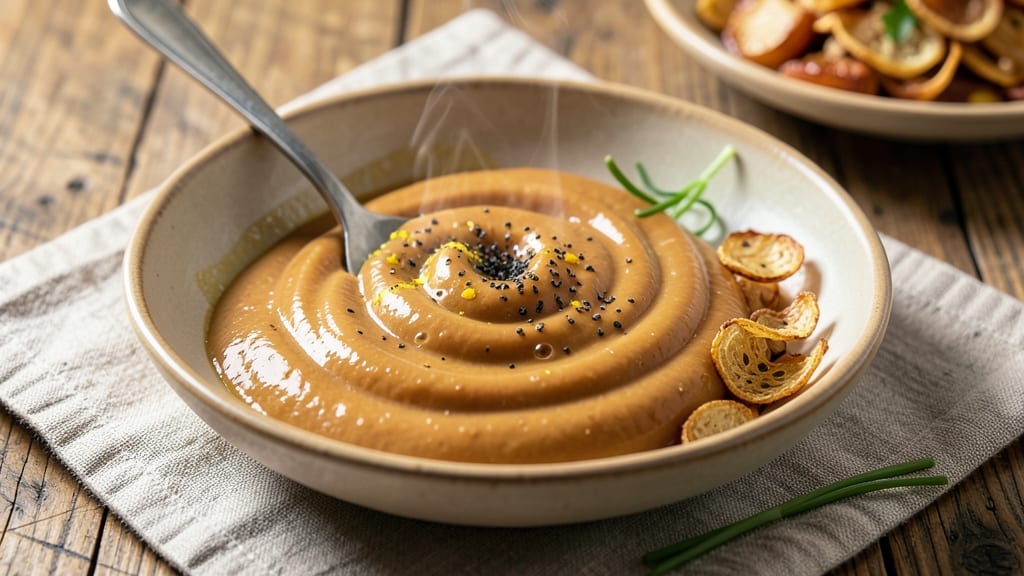
This Beecher's cheese sauce recipe delivers that signature ultra-smooth, velvety texture that makes every bite of mac and cheese irresistible. The secret lies in precise ratios of butter, flour, and milk that create a silky base before adding sharp cheddar for that iconic tangy depth.
I've perfected this version after years of testing—it pours like liquid gold and clings perfectly to noodles or baked potatoes.
What sets this sauce apart is its foolproof technique: slow reduction of the roux to eliminate any flour taste, followed by gradual cheese incorporation to prevent clumping. The result is a sauce that's rich yet balanced, with just enough creaminess to coat without overwhelming.
This isn't your basic cheese sauce—it's the kind that transforms ordinary dishes into restaurant-quality meals.
With just six simple ingredients and 15 minutes of active time, you'll have enough sauce to generously coat a large batch of mac and cheese or top individual baked potatoes.
The versatility doesn't stop there—it works beautifully as a dip for breadsticks, a topping for burgers, or even a creamy base for loaded nachos. The smooth texture makes it ideal for piping over casseroles too.
For those who prefer extra tang, a dash of mustard powder enhances the flavor profile without altering the signature smoothness. The key to success is patience during the cooking process—rushing leads to lumps, while proper technique guarantees that velvety consistency.
This is the cheese sauce that will have everyone asking for seconds, and likely requesting the recipe too.
Ingredients for beecher's cheese sauce
Six ingredients, restaurant-quality velvety sauce that transforms mac and cheese into a showstopper.
| Ingredient | Amount | Notes |
|---|---|---|
| Unsalted Butter 🧈 | ½ cup | Cold, cubed for roux |
| All-Purpose Flour 🌾 | ½ cup | Sifted, for smooth roux |
| Sharp White Cheddar Cheese 🧀 | 2 cups | Freshly grated, block preferred |
| Whole Milk 🥛 | 2 cups | Room temperature preferred |
| Yellow Mustard Powder 🌶️ | ½ tsp | For enhanced tanginess |
| Salt 🧂 | ½ tsp | Kosher or sea salt |
| White Pepper 🌶️ | ¼ tsp | Freshly ground for elegance |
The sharp white cheddar is non-negotiable—Kraft or Cabot brands deliver that signature tang. Grab a block and grate it yourself; pre-shredded gets clumpy. For the butter, Land O'Lakes or Plugrá work perfectly, but any unsalted will do. The flour should be Diamond Crystal if you're picky—it's lighter than most brands. Milk matters too: whole milk gives the best creaminess, but 2% works in a pinch. Store your cheese block wrapped in parchment in the fridge for up to 3 months—it keeps better than you'd think.
No sharp cheddar? Pepper jack adds heat, or Monterey Jack for milder tang. Substituting milk? Heavy cream makes it richer, but half-and-half cuts calories. Mustard powder optional but recommended—French's is reliable. For a dairy-free version, unsweetened almond milk works (reduce by 1/4 cup), but texture will be lighter. The roux is critical: cook the butter and flour low and slow until golden, or you'll taste the flour. Use a light-colored saucepan to monitor color accurately.
This sauce reheats beautifully—microwave in 30-second bursts with a splash of milk to restore creaminess. Portion into glass jars for easy storage; keeps 5 days in the fridge or 3 months frozen. For leftovers, reheat gently on the stove with a splash of milk to prevent separation. The mustard powder keeps indefinitely, so store it in a cool, dark place away from other spices. Freeze extras in ice cube trays for perfect single-serving portions.
Why You'll Love This Recipe
- Five-Ingredient Magic: I swear by this recipe because it’s the kind of sauce that proves you don’t need a fancy pantry. Butter, flour, cheddar, milk, and a pinch of mustard powder—that’s it. No weird substitutes, no hunting for obscure spices. Honestly, if I forget one ingredient, I can still wing it.
- Creamy With Bite: That sharp white cheddar melts into something velvety, but the mustard powder keeps it from being too sweet or bland. It’s the kind of flavor that makes you pause mid-bite, like a secret handshake between comfort food and something a little more interesting.
- Dinner Party Ready: Between us, this sauce is my go-to for mac and cheese, baked potatoes, or even drizzled over grilled veggies. It’s fancy enough for guests but unfussy enough that I make it when it’s just me and a bad TV show. (Yes, even on a Tuesday night.)
- Leftovers That Don’t Let You Down: I make a double batch every time because reheating this sauce is next-level—no graininess, no sad texture. It’s the kind of leftovers that make you wonder why you didn’t plan for more. And since it’s mostly cheese and milk, it’s also my budget-friendly secret for stretching meals.
Step-by-step instructions for Beecher's cheese sauce
Master this classic technique for velvety, ultra-smooth cheese sauce every time—no lumps or graininess in sight.
Create a Perfect Roux
Melt the 0.5 cup unsalted butter in a medium saucepan over medium-low heat. Once fully melted, reduce heat to low and gradually whisk in the 0.5 cup all-purpose flour using a wire whisk. You're making a roux—the foundation of our sauce—and it needs to cook for 2-3 minutes until it turns a light golden color.
This is where the magic happens: the roux thickens the sauce and prevents separation. Stir constantly to avoid burning—if it darkens too much, you'll taste bitterness. The moment it smells nutty and looks like wet sand, it's ready for the next step. Don't rush this; a proper roux makes all the difference.
Gradually Add Milk for a Smooth Base
Slowly pour in 1 cup of the whole milk while whisking vigorously to prevent lumps. Keep the heat at medium-low and continue whisking for 2-3 minutes until the mixture thickens enough to coat the back of a spoon. This is called tempering—the milk needs to warm gradually to avoid curdling.
Once smooth, add the remaining 1 cup whole milk in a thin stream, whisking constantly. Let the mixture simmer gently for 3-4 minutes until it thickens noticeably. You're building the sauce's structure here—if it gets too thick too soon, thin it with a splash of milk. The goal is a silky consistency that's ready to accept the cheese.
Incorporate Cheese and Seasonings
Lower the heat to low and begin adding the 2 cups sharp white cheddar cheese in small batches. Stir constantly with a wooden spoon—this prevents clumping and ensures even melting. The cheese should melt completely in 3-5 minutes, creating a glossy, velvety texture. If you see any unmelted cheese, reduce heat further and stir more gently.
Once melted, whisk in the 0.5 tsp yellow mustard powder, 0.5 tsp salt, and 0.25 tsp white pepper. The mustard powder adds subtle tang that balances the richness, while the white pepper provides elegant seasoning without dark specks. Taste and adjust seasoning—sometimes cheese varies in saltiness, so this is your chance to perfect the flavor.
Simmer for Maximum Smoothness
Return the sauce to a gentle simmer and cook for 2-3 minutes longer, stirring occasionally. This final step ensures all flavors meld together and the sauce reaches its ideal pouring consistency. It should coat the back of a spoon smoothly but still be pourable—like warm honey.
If the sauce thickens too much, whisk in 1 tablespoon of milk at a time until it reaches your desired texture. For serving over mac and cheese, aim for a sauce that clings beautifully to each strand. Remove from heat immediately after—any longer cooking risks breaking the emulsion and creating separation.
Pro Tips For Making Beecher'S Cheese Sauce
- Melt Cheese Slowly: After whisking in the milk, reduce heat to medium-low and let the cheese melt gradually—rushing it with high heat turns the sauce grainy or clumpy. I learned this the hard way when my first batch looked like cottage cheese curds instead of smooth sauce.
- Grate Cheese Fine: Skip the food processor—sharp white cheddar holds moisture better when grated by hand on the smallest holes of a box grater. Larger shreds won’t dissolve completely, leaving you with a textured sauce instead of velvety perfection.
- Whisk Like Your Life Depends On It: Once the butter-flour roux is cooking, stop stirring and let it bubble for 30 seconds—then whisk vigorously. This prevents lumps and builds flavor faster than constant stirring. (Yes, even if you’re impatient like me.)
- Add Mustard Last: Toss the yellow mustard powder after the cheese is fully melted and off the heat—it burns easily and adds a sharp kick that cuts through the richness. Sprinkle it in while whisking, then taste and adjust.
Make-ahead tips for this dish
Prep Ahead Strategy
Make the roux base 2 days ahead and store it in an airtight container in the fridge. When ready to use, simply whisk in the milk and cheese—this cuts active cooking time by half.
The roux keeps well for 48 hours without losing its thickening power, making it perfect for busy weeknights. 🧈
Freezer-Friendly Sauce
Freeze the completed sauce in quart-sized freezer bags, leaving 1-inch headspace for expansion. Thaw overnight in the fridge, then reheat on the stove with 1 tablespoon milk per cup of sauce to restore creaminess.
I’ve found this method preserves texture better than freezing in jars. Label with the date—it stays good for 3 months. ❄️
Cheese Prep Shortcut
Grating cheese ahead saves time during cooking. Store grated cheddar in a resealable bag in the fridge for up to 3 days. For extra convenience, freeze grated cheese in 1-cup portions—it thaws quickly and maintains flavor.
Just be sure to squeeze out excess moisture before adding to the sauce. 🧀
Double Batch Prep
Double the recipe and divide into two 8x8-inch baking dishes. Cover tightly with foil and refrigerate for up to 5 days. Reheat covered in a 350°F oven for 15 minutes—perfect for quick mac and cheese nights.
This also works great for meal prep when you’re feeding a crowd. 🍽️
Sauce Stabilizer Hack
Add 1 teaspoon cornstarch to the roux while cooking to prevent separation when reheating. This trick keeps the sauce silky even after multiple reheats. I discovered this after accidentally overcooking a batch—now I always include it as insurance. The texture remains velvety through 3 reheats. ✨
Portion Control Tips
Use ice cube trays for single-serving portions—freeze sauce in them, then pop out and store in a bag. Each cube makes enough sauce to top one baked potato or one serving of mac and cheese.
Label with the date and reheat in the microwave for 45 seconds. This eliminates waste and makes leftovers effortless. 📅
Nutrition facts
Frequently asked questions
Why does Beecher's cheese sauce need a roux?
The roux (butter and flour mixture) creates a stable base that prevents the sauce from separating when hot milk is added. Cooking it to a light golden color eliminates any raw flour taste and gives the sauce its signature velvety texture. Skipping this step often leads to grainy or lumpy results.
Can I make this sauce without mustard powder?
Yes! The mustard powder adds subtle tang, but it's optional. If you prefer a milder flavor, simply omit it. For extra tang without powder, add 1/2 teaspoon Dijon mustard at the end—just whisk it in quickly before serving. The sauce will still be delicious either way.
What's the best way to fix a lumpy cheese sauce?
If you see lumps while cooking, immediately remove the pan from heat and use an immersion blender to smooth it out. For stubborn lumps, strain the sauce through a fine-mesh sieve. Prevention is key—always add cheese gradually over low heat while stirring constantly. A splash of cold milk can also help break up clumps.
How do I keep this sauce from getting too thick?
Add milk 1 tablespoon at a time until you reach your desired consistency. For extra insurance, keep a small cup of milk nearby while cooking. If it thickens too much after removing from heat, whisk in 1-2 tablespoons of warm milk to restore creaminess. The sauce should coat the back of a spoon but still pour smoothly.
Can I use this sauce for dishes other than mac and cheese?
This versatile sauce works beautifully on baked potatoes, broccoli, cauliflower, grilled cheese sandwiches, or even as a dip for breadsticks. For extra richness, try drizzling it over burgers or hot dogs. The smooth texture makes it perfect for piping over casseroles too—just transfer to a piping bag with a star tip.