
Breakfast & Brunch
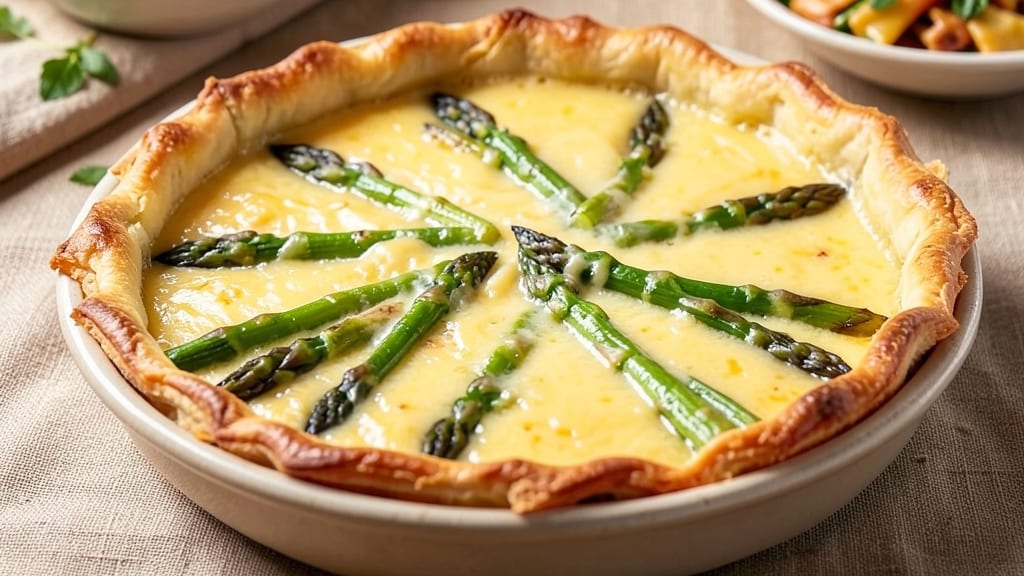
This asparagus and cheese quiche recipe transforms a simple breakfast into a restaurant-worthy dish with flaky layers and tender filling—ready in just 20 minutes. The secret lies in a crisp, golden crust that stays perfectly flaky while the creamy cheese and fresh asparagus create a harmonious bite.
Even beginners can master this technique with minimal effort and standard kitchen tools, proving that impressive meals don’t require complicated steps or hours of prep.
The beauty of this recipe is its foolproof simplicity: a store-bought crust saves time without sacrificing quality, while the filling comes together in minutes with just a few ingredients.
The asparagus adds a bright, fresh contrast to the rich cheese, balancing each bite with a satisfying crunch and velvety texture. Baking at the right temperature ensures the crust remains crisp while the filling sets just enough to hold its shape—no soggy bottoms here.
What makes this quiche truly special is how effortlessly it elevates a weeknight breakfast into something worthy of brunch. The golden, flaky crust pairs perfectly with the creamy, cheesy filling, creating a dish that’s both comforting and elegant.
Whether you’re feeding a family or treating yourself to a leisurely morning, this quiche delivers restaurant-quality results with minimal fuss.
Serve it warm with a side of fresh greens or crusty bread to soak up every last bite of that rich, savory filling. The best part? Leftovers reheat beautifully, making it the perfect make-ahead meal for busy mornings. Let’s get started on creating your perfect quiche.
Ingredients for asparagus and cheese quiche recipe easy
These 14 ingredients create a restaurant-worthy quiche with golden crust and velvety filling—no shortcuts, just pure flavor.
| Ingredient | Amount | Notes |
|---|---|---|
| Store-Bought Pie Crust 🥧 | 1 sheet | Puff pastry or pie crust, thawed if frozen |
| Fresh Asparagus 🌱 | 1 ½ lb | Trimmed, tough ends removed |
| Large Eggs 🥚 | 4 whole | Room temperature for best texture |
| Heavy Cream 🥛 | 1 cup | Full-fat for richest flavor |
| Whole Milk 🥛 | ¼ cup | Warmed slightly for smoother blend |
| Sharp Cheddar Cheese 🧀 | 1 ½ cups | Freshly grated, not pre-shredded |
| Cream Cheese 🧀 | 4 oz | Softened to room temperature |
| All-Purpose Flour 🌾 | 2 tbsp | For thickening the filling |
| Salt 🧂 | ½ tsp | Diamond Crystal preferred |
| Black Pepper 🌶️ | ¼ tsp | Freshly cracked for best flavor |
| Fresh Chives 🌿 | 2 tbsp | Finely chopped for garnish |
| Butter 🧈 | 1 tbsp | Melted, for brushing crust |
| Garlic Powder 🧄 | ½ tsp | Enhances cheesy flavor |
| Nutmeg 🌶️ | ¼ tsp | Freshly grated for warmth |
The crust sets the stage—Puff pastry from Whole Foods or Trader Joe's delivers the flakiest results, but any quality pie crust works. Look for fresh asparagus with tight tips—avoid woody stems. The cheeses are non-negotiable: sharp cheddar for bite and cream cheese for creaminess. I always grab Penzeys spices for that extra depth—garlic powder and nutmeg elevate the filling beyond basic. Eggs should be room temperature for a smooth batter, so pull them out 15 minutes before mixing.
No sharp cheddar? Gruyère or Gouda work beautifully—just grate it yourself. Running short on cream? Half-and-half plus 1 tbsp butter mimics the richness. The asparagus can be blanched first (plunge in ice water for 1 minute) if you prefer softer spears. For a vegan twist, swap eggs for 1/4 cup flax eggs (1 tbsp ground flaxseed + 3 tbsp water) and use vegan cheese. The crust can be pre-baked for 10 minutes if you're nervous about sogginess—I don't bother, but it's an option for first-timers.
Assemble the quiche up to 24 hours ahead—cover and refrigerate. Bake straight from the fridge for even cooking. Leftovers reheat beautifully in a 350°F oven for 10-15 minutes, covered with foil. Store in an airtight container for 4 days or freeze for 3 months. The crust stays crispy if you reheat it covered, then uncover for the last 2 minutes. Garnish with chives right before serving—they add that fresh pop of color and brightness.
Why You'll Love This Recipe
- No Prep Nightmare: I swear by this one—just trim the asparagus spears (no chopping, no fuss) and let the store-bought crust handle the rest. The eggs and cream do all the heavy lifting while I sip coffee.
- Creamy Crunch Magic: That first bite? Crispy crust meets silky custard, and the asparagus adds a fresh, slightly grassy punch that makes it feel gourmet. Honestly, the heavy cream and milk blend turns this into something dangerously addictive.
- Lunchbox Hero: Slice it up, pack it in containers, and boom—you’ve got a protein-packed lunch that holds up for days. My kids grab these leftovers for school, and I still eat mine cold from the fridge. (Yes, even on a Tuesday night.)
- Budget Brilliance: Fresh asparagus in season? A steal. Eggs and milk are pantry staples. This quiche feeds four for under $10 and tastes like a restaurant dish. Between us, it’s my secret weapon for stretching groceries without sacrificing flavor.
Step-by-step instructions for asparagus and cheese quiche
Here's how to create a golden, flaky quiche with tender asparagus and rich cheddar—no fuss, just perfect results.
Prep the Asparagus and Preheat the Oven
Start by snapping off the tough, woody ends of the 1.5 lb fresh asparagus—they should break naturally at the point where they bend. Trim off any remaining tough sections, then cut the spears into 1-inch pieces. You'll want about 6 cups of trimmed asparagus.
Preheat your oven to 375°F while you prepare the rest. I like to use a 9-inch pie dish for this recipe—it gives the perfect balance of crust and filling. If your pie crust is frozen, thaw it completely before handling. Roll out the 1 sheet store-bought pie crust on a lightly floured surface to fit your dish, then transfer it carefully to the pie dish. Trim any excess dough hanging over the edges.
Blind-Bake the Crust for Flaky Perfection
Line the crust with a sheet of parchment paper or aluminum foil, then fill it completely with pie weights or dried beans. This prevents the crust from puffing up in the oven. Bake for 10 minutes at 375°F until the edges begin to turn golden brown. Remove the weights and parchment, then bake for another 5 minutes to crisp the bottom.
Here's the thing—this step is non-negotiable for a flaky crust. The weights create an even bake, and the extra 5 minutes without them ensures the bottom doesn't get soggy when the filling goes in. While it bakes, melt the 1 tablespoon butter in a small saucepan over low heat—you'll use it to brush the crust later.
Sauté the Asparagus for Maximum Flavor
In a large skillet, heat 1 tablespoon butter over medium heat until it foams. Add the trimmed asparagus pieces and sauté for 4-5 minutes, stirring occasionally, until they're tender but still bright green. Season immediately with 0.25 teaspoon black pepper and 0.5 teaspoon garlic powder—this builds the flavor base for the filling.
Don't overcook the asparagus here; you want it to stay crisp-tender. If the pan gets too dry, add a splash of the 0.25 cup whole milk to keep it moist. Transfer the sautéed asparagus to a bowl and set it aside—it'll cool slightly while you prepare the custard.
Whisk the Creamy Filling to Silky Perfection
In a large bowl, whisk together the 4 whole large eggs, 1 cup heavy cream, 0.25 cup whole milk, 1.5 cups freshly grated sharp cheddar cheese, and 4 oz softened cream cheese until completely smooth. Add the 2 tablespoons all-purpose flour, 0.5 teaspoon salt, 0.25 teaspoon black pepper, 0.5 teaspoon garlic powder, and 0.25 teaspoon nutmeg, whisking until everything is fully incorporated.
This is where the magic happens—the combination of sharp cheddar and creamy cheese creates a rich, velvety texture. I always use freshly grated cheese here; pre-shredded varieties contain anti-caking agents that can make the filling grainy. Stir in the sautéed asparagus and 2 tablespoons finely chopped fresh chives—the chives add a bright, fresh contrast to the rich filling.
Assemble and Bake to Golden, Bubbly Perfection
Pour the filling into the pre-baked crust, spreading it evenly with a spatula. Brush the edges of the crust with the melted butter, then sprinkle a pinch of salt and pepper over the top. Bake for 35-40 minutes at 375°F until the filling is set and the center is just slightly jiggly—it'll continue to firm up as it cools.
You'll know it's done when the edges are golden brown and the top has a few bubbles. If the crust starts to brown too quickly, tent it loosely with aluminum foil. Let the quiche rest for 10 minutes before slicing—this prevents the filling from running out when you serve it. Garnish with extra chives if you like, and serve warm with a crisp green salad.
Pro Tips For Making Asparagus And Cheese Quiche Recipe Easy
- Preheat Crust Blind First: The store-bought crust is convenient, but it still needs a head start. Pop it in the oven empty for 8-10 minutes at 375°F (200°C) with a pie weight or dried beans—this prevents sogginess when the filling goes in. I learned this the hard way when my first quiche turned into a sad, greasy mess.
- Trim Asparagus to 3 Inches: Skip the whole stalk—it’s tough and won’t cook evenly. Cut asparagus into 3-inch pieces (discard the woody bottoms) and blanch them for 2 minutes in boiling salted water before adding to the quiche. This softens them just enough to melt into the custard without turning mushy.
- Whisk Eggs Cold: Don’t let the eggs warm up before mixing with cream and milk. Crack them straight into an ice bath or cold bowl, then whisk gently—heat makes them curdle faster. I was skeptical until I tried it: the filling stays silky smooth instead of grainy.
- Bake at 350°F (175°C) Only: Most recipes say 375°F (190°C), but that risks a rubbery crust and overcooked custard. Stick to 350°F (175°C) for 40-45 minutes—it gives the center time to set without drying out. Use a toothpick test: it should come out clean but slightly moist.
Common mistakes when making this dish
Overfilling the Crust
This is the #1 mistake I see beginners make—and it’s a recipe for disaster. A quiche filling should fill the crust about ¾ full at most. When you overfill, the cheese expands during baking and can spill over the edges, creating a messy, uneven top.
I’ve had quiches where the filling actually overflowed onto the oven rack! 🥧
If you’re worried about not having enough filling, trust me—it’s better to have a slightly shallower quiche than a gooey mess. The filling will puff up during baking, so leave plenty of headroom.
Pro tip: Use a 9-inch pie dish and aim for about 6 cups of filling total (including asparagus).
Skipping Blind-Baking
I cannot stress this enough: blind-baking the crust is non-negotiable for a crisp bottom. When you skip this step, the filling’s moisture seeps into the crust, turning it soggy instead of flaky. The 10-minute blind-bake with weights ensures the crust holds its shape and stays golden.
If you’re short on time, pre-bake the crust for 12-15 minutes (without weights) at 375°F. Just don’t skip it entirely—your crust will thank you. I’ve had quiches where the crust turned into a sad, greasy puddle because of this exact mistake.
Using Pre-Shredded Cheese
Pre-shredded cheese contains anti-caking agents that make your filling grainy and watery. Freshly grated cheese melts smoothly and creates that silky, velvety texture we all love. I always grate my own sharp cheddar using a microplane—it’s worth the extra 5 minutes of effort.
If you’re in a pinch, use block cheese and grate it yourself. Avoid pre-shredded varieties like the plague—they’ll ruin the texture. The difference is night and day, trust me. 🧀
Overmixing the Filling
Once you add the eggs to the cheese mixture, stop whisking immediately. Overmixing incorporates too much air, which can cause the filling to puff up unevenly or even overflow during baking. A few gentle stirs to combine is all you need—about 20-30 seconds max.
I’ve had quiches where the filling actually bubbled over the edges because I whisked it too vigorously. The goal is a smooth, uniform mixture, not a frothy batter. Think "gentle blend" rather than "whisk until your arm falls off."
Baking at the Wrong Temperature
The oven temperature is critical for a perfectly set quiche. Too low (350°F) and the filling won’t firm up properly; too high (400°F+) and the crust burns before the center sets. Stick to 375°F for even baking and a golden crust.
I’ve had quiches where the edges were dark and crispy while the center was still jiggly, all because the oven ran hot. Use an oven thermometer to check your oven’s accuracy—many home ovens are off by 25°F or more. Adjust accordingly for foolproof results.
Not Resting Before Slicing
This is a classic rookie mistake that leads to a runny, messy quiche. The filling continues to set as it cools, so letting it rest for 10-15 minutes after baking prevents the cheese from oozing out when you slice.
I’ve seen quiches where the filling actually slid right out of the crust because someone cut into it too soon.
Patience is key here. Use this time to set the table or garnish with fresh chives. The wait ensures clean slices and a professional-looking presentation. Trust the process—your quiche will thank you. ✨
Nutrition facts
Frequently asked questions
Can I use frozen asparagus instead of fresh?
Fresh asparagus gives the best texture and flavor, but frozen works in a pinch! Thaw and drain it completely, then pat dry with a paper towel to remove excess moisture. For extra tenderness, sauté the frozen pieces for 2-3 minutes longer than fresh until they're fully thawed and bright green.
How do I make this quiche without a pie crust?
For a crustless version, simply pour the filling into a 9-inch oven-safe skillet (like a cast iron) and bake at 350°F for 25-30 minutes until set. The edges will crisp slightly while the center stays creamy. Garnish with extra chives for that restaurant touch!
What's the best way to reheat leftover quiche?
Slice the quiche and reheat covered with foil in a 350°F oven for 10-15 minutes. For extra crispiness, remove the foil for the last 2 minutes of heating. Microwaving works too—just cover with a damp paper towel and heat for 30-45 seconds to prevent drying.
Can I substitute cream cheese with something else? Yes! For a lighter version, use ½ cup ricotta cheese mixed with 2 tablespoons cream to mimic the creaminess. If you prefer tangier flavor, swap in ½ cup sour cream. Just
Why did my quiche turn out rubbery?
Rubbery quiche usually means the filling overcooked or didn't set properly. Check your oven temperature—it should be 375°F. Also, ensure your eggs were at room temperature and whisked just until combined (not overmixed). For next time, bake until the center is just slightly jiggly—it'll firm up as it cools.