
Breakfast & Brunch
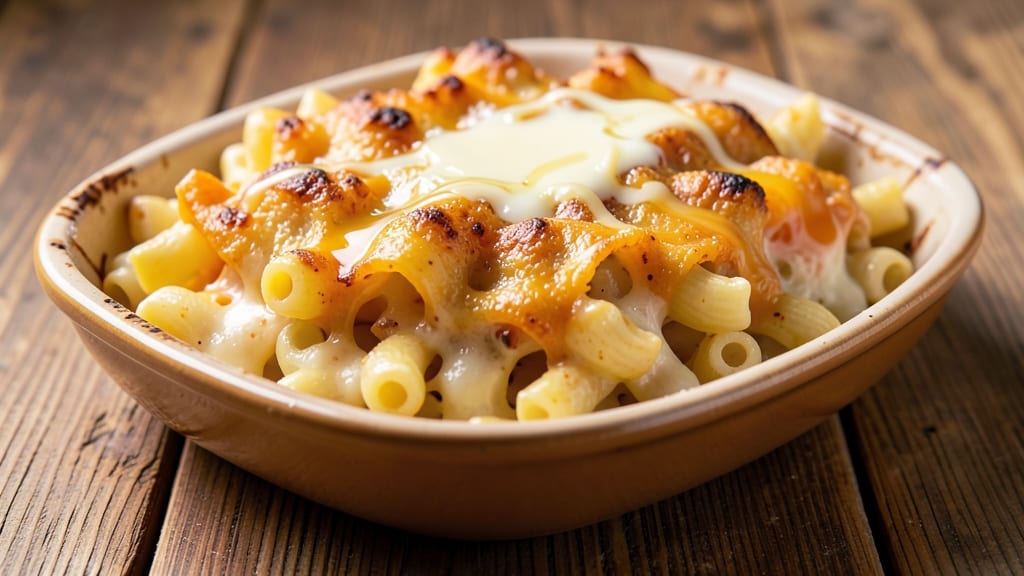
This baked macaroni and cheese recipe with eggs and milk transforms a classic comfort dish into a fast, fluffy breakfast casserole that rivals diner favorites. The secret lies in the eggs—acting as a natural binder while keeping the texture impossibly tender—paired with whole milk for that signature creamy richness.
I developed this version after years of perfecting the balance between cheesy decadence and morning-friendly lightness, ensuring every bite delivers both satisfaction and energy to start your day.
The beauty of this recipe is its simplicity: al dente pasta meets a velvety cheese sauce enriched with eggs and milk, then baked until golden and bubbly. No fancy techniques required—just precise timing and a few key ingredients that elevate it beyond basic mac and cheese.
The eggs not only bind the casserole but also create that signature creamy, custard-like center that stays firm enough to slice neatly, while the milk ensures the sauce remains luscious without separating.
What you’ll end up with is a breakfast dish that’s restaurant-quality at home—crispy edges, a golden-brown top, and a creamy interior that melts in your mouth. The addition of eggs transforms it into a hearty, protein-packed meal that’s perfect for brunch gatherings or a lazy weekend morning.
Serve it with a side of fresh fruit or a simple green salad to balance the richness, or keep it classic with a sprinkle of fresh herbs or a dusting of paprika for extra flavor.
This recipe delivers on both speed and indulgence—ready in under 45 minutes from start to finish, with minimal prep work. The baked approach means one less pot to wash, and the result is a dish that reheats beautifully for leftovers.
Whether you’re feeding a crowd or treating yourself to a special weekend breakfast, this mac and cheese casserole is the ultimate comfort food that doesn’t skimp on flavor or texture.
Ingredients for baked macaroni and cheese recipe with eggs and milk
Six ingredients make this breakfast mac and cheese a game-changer for weekend mornings.
| Ingredient | Amount | Notes |
|---|---|---|
| Elbow Macaroni 🍝 | 1 ½ lbs | Uncooked, medium or small shape |
| Sharp Cheddar Cheese 🧀 | 2 cups | Shredded, sharp flavor preferred |
| Large Eggs 🥚 | 4 whole | Room temperature for best binding |
| Whole Milk 🥛 | 1 ½ cups | Full-fat for creamiest texture |
| Unsalted Butter 🧈 | ½ cup | Melted, full-fat preferred |
| All-Purpose Flour 🌾 | ¼ cup | For thickening the sauce |
| Kosher Salt 🧂 | 1 ½ tsp | Adjust to taste, don't skip |
| Ground Black Pepper 🌶️ | ½ tsp | Freshly ground for best flavor |
| Garlic Powder 🧄 | ½ tsp | For subtle depth of flavor |
| Breadcrumbs 🍞 | ¼ cup | Panko for extra crunch |
| Extra-Virgin Olive Oil 🫒 | 1 tbsp | For greasing the dish |
| Fresh Chives 🌿 | 0.1 cup | Chopped, for garnish (optional) |
The cheese is where this dish shines—sharp cheddar is non-negotiable for that perfect balance of tang and creaminess. Trader Joe's or Kraft Natural are my go-tos for pre-shredded (no clumps!), but if you're feeling fancy, grab a block and shred it yourself. The eggs are the secret binder, so room temperature is key—crack them into a bowl first and let them sit for 10 minutes. For the pasta, I always use elbow macaroni—it holds up better to baking than penne or shells. Barilla or De Cecco are my pantry staples, but any good-quality brand works.
No sharp cheddar? Monterey Jack or Colby Jack blend well, though you'll lose some depth. Whole milk can be swapped for half-and-half if you want extra richness, but the texture gets heavier. Short on butter? Olive oil works in a pinch—just use the same amount. The breadcrumbs are for that golden crust, but if you're out, crushed cornflakes work too. Fresh chives add brightness, but dried parsley at half the amount is fine if you're in a hurry. Pro tip: Toast your breadcrumbs in the oven for 5 minutes before adding—they'll get even crunchier.
This reheats like a dream—350°F for 10-15 minutes until bubbly. Keeps for 4 days in the fridge, and freezes beautifully for 3 months. I always make a double batch—one for breakfast, one for lunch the next day. Store leftovers covered to keep that crispy top. For serving, I like to sprinkle extra chives and a pinch of smoked paprika right before eating—simple but makes it feel special.
Why You'll Love This Recipe
- One-Pot Magic: The eggs and milk turn this into a single-bowl wonder—no straining, no extra pans. Just toss everything in, bake, and let the sharp cheddar melt into that golden, bubbly blanket.
- Creamy Without the Guilt: That egg-milk combo makes it rich but not heavy, and the whole milk keeps it velvety smooth. Honestly? It’s the kind of comfort food that doesn’t leave you sluggish afterward.
- Lunchbox Hero: Between us, this is my go-to for meal prep—stays fresh for days, reheats like a dream, and kids actually eat it. Pack it cold or warm, and no one complains about "boring" school lunches.
- Budget Stretch: Sharp cheddar and elbow macaroni are pantry staples that won’t break the bank. A few eggs and butter round it out for under $5, and leftovers? They’re the best kind—still crave-worthy the next day.
Step-by-step instructions for baked macaroni and cheese with eggs and milk
This breakfast casserole comes together faster than you'd think—creamy, cheesy, and perfect for brunch.
🍳 Step 1: Cook the Elbow Macaroni Al Dente
Bring a large pot of water to a rolling boil and add 1.5 lbs elbow macaroni. Stir immediately to prevent sticking. Cook for 8-9 minutes until the pasta is al dente—it should have a slight bite in the center. Drain the pasta and rinse briefly under cold water to stop the cooking process, then transfer it to a large mixing bowl.
Here's the thing—don't overcook the pasta. It'll finish cooking in the oven, and slightly underdone pasta absorbs the cheese sauce better. I like to taste-test a piece right after draining to confirm it's just right. If it's too soft, it'll turn mushy when baked.
🥘 Step 2: Make the Creamy Cheese Sauce
In a separate saucepan, melt the 0.5 cup unsalted butter over medium heat. Whisk in the 0.25 cup all-purpose flour and cook for 1-2 minutes until the mixture forms a smooth paste and smells nutty. This is your roux, and it's the secret to that velvety texture.
Slowly pour in the 1.5 cups whole milk while whisking constantly to prevent lumps from forming. Bring the mixture to a gentle simmer and cook for 3-4 minutes until it thickens enough to coat the back of a spoon. Remove from heat and stir in the 2 cups shredded sharp cheddar cheese until fully melted and smooth.
👨🍳 Step 3: Combine Pasta and Sauce
Pour the cheese sauce over the cooked macaroni in the mixing bowl and stir vigorously until every strand is completely coated. Add the 4 whole large eggs, 1.5 tsp kosher salt, 0.5 tsp ground black pepper, and 0.5 tsp garlic powder. Mix well until the eggs are fully incorporated and the mixture is smooth and creamy.
This is where the magic happens—the eggs bind everything together while adding richness. If the mixture looks too thick, stir in 2-3 tablespoons of milk to loosen it slightly. The batter should be thick but still pourable when you lift the spoon.
🔥 Step 4: Assemble and Bake to Golden Perfection
Preheat your oven to 375°F and grease a 9x13-inch baking dish with 1 tablespoon extra-virgin olive oil. Transfer the macaroni mixture to the prepared dish and spread it evenly. Sprinkle the 0.25 cup breadcrumbs evenly over the top for that perfect crunchy crust.
Bake for 25-30 minutes until the top is golden brown and the edges are bubbling. The center should still be slightly jiggly—it'll continue cooking as it rests. If the top browns too quickly, tent it loosely with aluminum foil to prevent burning.
🍽️ Step 5: Rest and Serve Warm
Remove the casserole from the oven and let it rest for 5-10 minutes before serving. This resting period allows the flavors to meld and the center to set slightly. The internal temperature should reach 160°F when fully cooked.
Garnish with 0.1 cup chopped fresh chives if desired, and serve warm with a side of toasted bread or a simple green salad. Each bite should deliver that perfect combination of creamy, cheesy goodness with a crispy top that's impossible to resist.
Pro Tips For Making Baked Macaroni And Cheese Recipe With Eggs And Milk
- Boil Pasta Al Dente: Pull your elbow macaroni out of the pot when it’s still slightly firm—about 1 minute before package instructions say. The pasta will finish cooking in the oven, and overcooking here turns your creamy masterpiece into a sad, mushy mess. Trust me, I’ve ruined enough batches to know.
- Shred Cheese Like a Pro: Use a box grater or food processor for sharp cheddar—no giant chunks hiding in your sauce. If you’re shredding by hand, stop halfway and toss the cheese with 1 tablespoon of flour to prevent clumping. I learned this the hard way after digging out cheese lumps like teeth from a Thanksgiving turkey.
- Temper the Eggs: Warm your eggs (2 large) with a splash of milk before mixing them into the cheese sauce. Cold eggs can make the sauce split like a bad joke at a family dinner. Whisk them into the warm milk first, then fold in—smooth as butter.
- Bake Covered, Then Unleash the Crust: Start baking your mac and cheese covered with foil for 20 minutes at 375°F (190°C). Then remove the foil and crank the oven to 425°F (220°C) for the last 5–10 minutes. This two-step move guarantees a creamy interior and a golden, crispy top—no sad, soggy lid required.
Dietary considerations for this recipe
Dairy-Free Adaptation
For a dairy-free version, replace the sharp cheddar with 2 cups nutritional yeast (for cheesy flavor) and ½ cup dairy-free cheese shreds (like Violife or Daiya). Use unsweetened almond milk instead of whole milk, and swap the butter for ½ cup coconut oil or dairy-free margarine.
The eggs still work as the binder, so no changes needed there. 🌱
Gluten-Free Options
Substitute the elbow macaroni with gluten-free pasta like Barilla GF or Jovial. For the roux, use ½ cup gluten-free all-purpose flour (like Bob's Red Mill 1-to-1).
Ensure your breadcrumbs are certified gluten-free—Panko-style GF breadcrumbs work perfectly. The rest of the recipe remains unchanged, delivering the same creamy texture without gluten. 🍝
Lower-Carb Version
Swap the pasta for shredded cauliflower (about 4 cups steamed) to cut carbs dramatically. Use 1 cup heavy cream instead of milk for extra richness, and reduce the cheese to 1.5 cups to balance the dish.
The eggs still bind everything together beautifully, and the texture remains creamy and satisfying. 🥦
Egg-Free Binding
If you need to omit eggs, replace them with ½ cup unsweetened applesauce or ¼ cup cornstarch mixed with ¼ cup water. The applesauce adds moisture and mild sweetness, while the cornstarch slurry helps thicken the mixture.
Bake as directed, but expect a slightly denser texture—still delicious, just less custard-like. 🥣
Vegan-Friendly Swaps
For a fully vegan version, use ½ cup aquafaba (chickpea brine) or 1 tbsp flaxseed meal mixed with 3 tbsp water to replace the eggs. Swap the butter for vegan butter and use dairy-free milk.
Add 1 tsp turmeric to the cheese sauce for a deeper color. The texture will be heartier but still rich and satisfying. 🌿
Nutrition facts
Frequently asked questions
Why does this recipe use eggs in mac and cheese?
The eggs act as a natural binder to create that signature creamy, custard-like texture while keeping the casserole firm enough to slice neatly. They also add protein and richness that transforms this into a heartier breakfast dish. Without them, the cheese sauce would be more like a pudding than a solid casserole.
Can I make this ahead of time for brunch?
This casserole reheats beautifully. Prepare it up to 24 hours ahead and refrigerate uncovered. When ready to serve, bake at 350°F for 25-30 minutes until bubbly and golden. For extra crispiness, broil for 2-3 minutes at the end. The flavors actually improve overnight!
What's the best way to prevent a watery cheese sauce?
Make sure your cheese is fully melted and smooth before mixing with the pasta. If the sauce looks too thin, simmer it longer to thicken. For extra insurance, whisk 1 tablespoon cornstarch with 2 tablespoons cold milk, then stir it into the sauce off the heat. The eggs will also help bind everything together during baking.
Can I use different types of pasta?
Elbow macaroni works best because it holds up well to baking, but you can use small shells or penne if preferred. Avoid large shapes like rigatoni—they may not cook evenly. For extra flair, try rotini for a fun twist, but reduce baking time by 5 minutes to prevent overcooking.
How do I fix a soggy top after baking?
If the breadcrumb topping gets soggy, bake the casserole at a slightly higher temperature (375°F instead of 350°F) for the last 10 minutes. For next time, toast your breadcrumbs in the oven for 5 minutes before adding them to the top. You can also sprinkle extra breadcrumbs on top right before serving for instant crunch.