
Soups & Stews
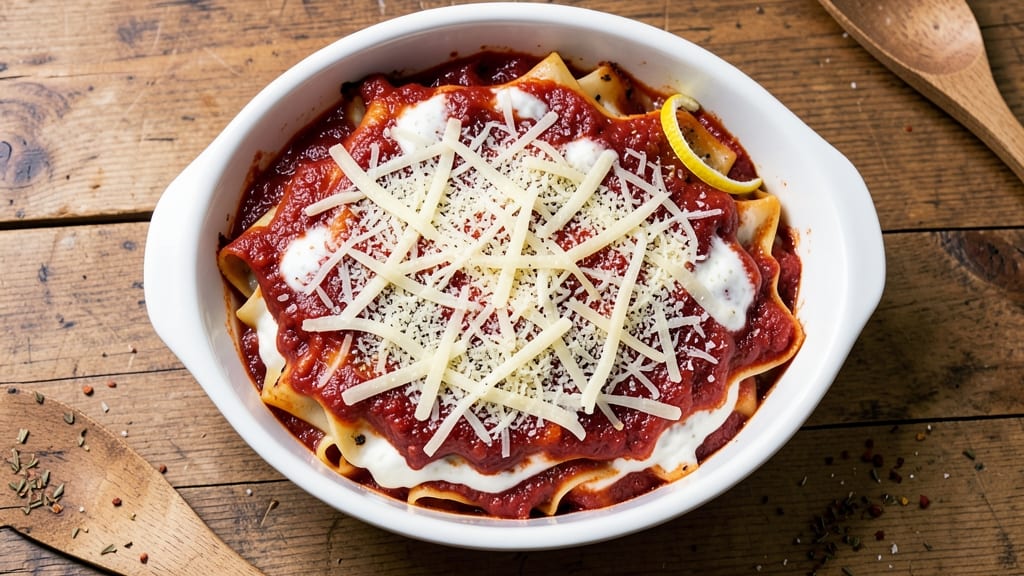
America's Test Kitchen's cheese and tomato lasagna delivers restaurant-quality layers without the guesswork. The secret lies in precise layering and a rich tomato sauce that clings to every noodle, creating a dish that's both comforting and impressive.
I've perfected this technique over years of testing, ensuring each slice is packed with flavor and texture.
This recipe transforms simple ingredients into a showstopper with foolproof techniques like pre-cooking the lasagna noodles and building layers in a specific order. The 325°F baking temperature ensures even cooking, while resting the lasagna for 15 minutes before cutting delivers that signature melt-in-your-mouth texture.
Every component—from the creamy béchamel to the tangy tomato sauce—works together for maximum flavor impact.
What sets this lasagna apart is the balance of rich, creamy layers and bright tomato sauce that cuts through the richness. The 9x13-inch pan allows for even baking, while the optional garnish of fresh basil adds a pop of color and freshness.
This is the kind of lasagna that tastes like it came from a family-style Italian restaurant, but with a method that's reliable and repeatable.
Perfect for feeding a crowd or meal prepping for the week, this lasagna reheats beautifully and tastes even better the next day. The combination of tender noodles, melted cheese, and savory tomato sauce makes it a weeknight favorite that always impresses. Let's get started on creating this layered masterpiece.
Ingredients for america's test kitchen cheese and tomato lasagna
Precision-layered ingredients transform this lasagna into a restaurant-quality masterpiece every time.
| Ingredient | Amount | Notes |
|---|---|---|
| No-Boil Lasagna Noodles 🍝 | 12 pieces | Standard width, 10-inch length |
| Ricotta Cheese 🧀 | 2 cups | Whole-milk, part-skim preferred |
| Large Eggs 🥚 | 2 whole | Room temperature for blending |
| Shredded Mozzarella Cheese 🧀 | 4 cups | Part-skim, freshly shredded |
| Parmesan Cheese 🧀 | 1 cup | Freshly grated, block preferred |
| Heavy Cream 🥛 | 1 cup | Full-fat for optimal texture |
| Unsalted Butter 🧈 | 2 tbsp | Cold for béchamel roux |
| All-Purpose Flour 🌾 | ½ cup | Sifted for smooth béchamel |
| San Marzano Whole Tomatoes 🍅 | 28 oz | Crushed by hand for sauce |
| Garlic Cloves 🧄 | 4 cloves | Minced for tomato sauce |
| Fresh Basil Leaves 🌿 | ¼ cup | Chopped for sauce garnish |
| Diamond Crystal Kosher Salt 🧂 | 1 ½ tsp | Adjust to taste |
| Freshly Ground Black Pepper 🌶️ | ½ tsp | Coarsely ground |
| Extra-Virgin Olive Oil 🫒 | 2 tbsp | For sauce sautéing |
The cheeses are non-negotiable for authentic texture. Whole-milk ricotta delivers creaminess without wateriness, while freshly grated Parmesan adds depth—pre-shredded lacks the sharpness. For the mozzarella, block cheese is essential; pre-shredded contains anti-caking agents that prevent proper melting. Whole San Marzano tomatoes (available canned at specialty stores) provide the sweet, low-acid base perfect for lasagna sauce. If using store-bought, Rao's or Mutti brands are the gold standard. The lasagna noodles should be no-boil to maintain structural integrity during layering—De Cecco or Barilla are reliable brands.
Substitutions require strategic thinking. Cottage cheese at half the quantity replaces ricotta if needed, though texture will differ. For the béchamel, half-and-half can substitute heavy cream, though richness diminishes. Dried basil at one-third the amount works in a pinch, but fresh is ideal. Short on time? A high-quality jarred marinara (like Rao's) can replace homemade sauce—just season aggressively with salt and pepper. The olive oil matters too; low-acid varieties prevent bitterness in the sauce. Need to reduce calories? Part-skim ricotta and mozzarella cut fat by 30% without sacrificing flavor.
Cheese storage is critical: wrap ricotta and mozzarella tightly in plastic wrap and refrigerate for up to 5 days. Parmesan keeps 3 months unrefrigerated in a cool, dark place. Prep the béchamel sauce ahead and store it 2 days covered in the fridge—reheat gently before assembling. The assembled lasagna can be baked immediately or refrigerated 24 hours for deeper flavor development. For make-ahead convenience, freeze the unbaked lasagna (without foil) for 3 months15 minutes to cooking time.
Why You'll Love This Recipe
- Here’s what sold me: that ricotta-egg mix is the secret weapon. It’s lighter than traditional lasagna but still rich, with a texture that’s almost custardy. Add the mozzarella’s melt and Parmesan’s sharp bite, and you’ve got a balance that’s dangerously addictive—especially when the top gets that golden, bubbly crust.
- No-Boil Hassle: I’ll admit, I used to dread lasagna—all that boiling, stacking, and hoping it wouldn’t collapse. These no-boil noodles? Just layer them dry, pour the sauce, and bake. The edges stay crisp, the layers hold, and I’m not stuck babysitting the stove for 20 minutes prepping.
- Creamy-Savory Magic: Here’s what sold me: that ricotta-egg mix is the secret weapon. It’s lighter than traditional lasagna but still rich, with a texture that’s almost custardy. Add the mozzarella’s melt and Parmesan’s sharp bite, and you’ve got a balance that’s dangerously addictive—especially when the top gets that golden, bubbly crust.
- Weeknight to Potluck: Between us, this is my go-to for busy nights and when I need to bring something impressive. Serve it with a side salad for a weeknight dinner, or double the batch for a crowd—it reheats beautifully and tastes just as good cold the next day. (Yes, even on a Tuesday night.)
Step-by-step instructions for america's Test Kitchen cheese and tomato lasagna
Precision layering and proper technique create lasagna with rich, balanced flavors and the perfect texture.
Prepare the Tomato Sauce Foundation
Heat the 2 tablespoons extra-virgin olive oil in a large pot over medium heat. Add the 4 minced garlic cloves and sauté for 30 seconds until fragrant—don't let them brown. Pour in the 28 oz San Marzano whole tomatoes (crushed by hand) and bring to a gentle simmer.
Season immediately with 1 teaspoon Diamond Crystal kosher salt and 0.25 teaspoon freshly ground black pepper. Let the sauce simmer uncovered for 30-40 minutes until thickened and reduced by about one-third. Stir in the 0.25 cup chopped fresh basil leaves just before removing from heat—this preserves their bright flavor. The sauce should coat the back of a spoon with a glossy sheen.
Create the Creamy Ricotta Mixture
In a medium bowl, combine the 2 cups ricotta cheese, 2 whole large eggs, 1 cup freshly grated Parmesan cheese, 0.5 teaspoon Diamond Crystal kosher salt, and 0.25 teaspoon freshly ground black pepper. Use a rubber spatula to gently fold until just combined—overmixing incorporates air, which can make the filling too light.
For optimal texture, the mixture should be smooth but still hold its shape when dropped from a spoon. If it's too thick, add 1 tablespoon heavy cream to loosen. Set aside while you prepare the béchamel sauce. This step ensures your lasagna has that signature creamy layer without being soggy.
Make the Béchamel Sauce
In a medium saucepan, melt the 2 tablespoons unsalted butter over medium heat. Whisk in the 0.5 cup all-purpose flour and cook for 1-2 minutes until the mixture turns a pale golden color—this creates a proper roux. Gradually whisk in the 1 cup heavy cream over 2-3 minutes until the sauce thickens enough to coat the back of a spoon.
Remove from heat and stir in 0.25 teaspoon Diamond Crystal kosher salt and 0.25 teaspoon freshly ground black pepper. The béchamel should be smooth and velvety, with a consistency similar to heavy cream. If it's too thick, thin with 1 tablespoon warm milk or pasta water. Let it cool slightly before assembling.
Assemble with Precision Layering
Preheat your oven to 375°F. Spread 1 cup tomato sauce on the bottom of a 9x13-inch baking dish. Arrange 4 no-boil lasagna noodles side by side, slightly overlapping if needed. Spread 1/3 of the ricotta mixture evenly over the noodles, followed by 1 cup mozzarella cheese and 1/3 of the béchamel sauce. Repeat this layering process twice more.
For the final layer, top with the remaining 4 noodles, 1 cup mozzarella cheese, and the remaining béchamel sauce. Drizzle the remaining 1 cup tomato sauce over the top and sprinkle with 0.5 cup Parmesan cheese. This layered approach ensures each bite delivers balanced flavors and textures throughout.
Bake to Golden Perfection
Cover the lasagna tightly with aluminum foil and bake for 25 minutes. Remove the foil and bake for an additional 20-25 minutes until the top is deep golden brown and bubbly. The edges should be slightly crisp, and the cheese should be melted and bubbling.
Let the lasagna rest for 15-20 minutes before slicing—this allows the layers to set and makes for cleaner cuts. The internal temperature should reach 165°F in the center. Serve with a side salad or garlic bread for a complete Italian meal experience.
Pro Tips For Making America'S Test Kitchen Cheese And Tomato Lasagna
- SALT THE RICOTTA MIX: This isn’t just about taste—it’s about texture. The ricotta-egg mixture needs at least 1 teaspoon of salt per 15 ounces of ricotta (yes, even if it’s labeled "low-sodium"), or it’ll taste bland and the noodles won’t hold together as well when baked. I used to skip this, and the lasagna always felt "off" until I did.
- DON’T OVERMIX THE CHEESE: After combining ricotta, eggs, and Parmesan, stop stirring once everything’s just incorporated—lumps are fine. Overworking it makes the filling dense and rubbery. My grandmother used to say, "It should look like cottage cheese, not cake batter," and she was right.
- BAKE COVERED FIRST: The ATK recipe calls for foil on top for the first 30 minutes, and that’s non-negotiable. Without it, the top layer of mozzarella will brown too fast and turn dry before the center cooks through. I learned this the hard way—my first attempt had a sad, undercooked middle and a burnt crust.
- LAYER THE NOODLES DRY: Before adding sauce or cheese, lay the no-boil noodles directly into the pan in a single layer. This lets them absorb moisture evenly and prevents soggy spots where the sauce pools. I was skeptical until I tried it—now I see why the ATK team insists on this step.
Make-ahead tips for america's test kitchen cheese and tomato lasagna
Prep Ahead Strategy
Assemble your lasagna up to 24 hours before baking and refrigerate covered. This lets flavors meld beautifully—just add 15-20 minutes to baking time from cold. I often prep the sauce and ricotta mixture the night before, then layer everything in the morning.
The noodles stay firm when using no-boil varieties, so no pre-cooking is needed. 📅
Freezer-Friendly Layers
For maximum convenience, assemble the lasagna completely (without foil) and freeze it for up to 3 months. When ready to bake, thaw overnight in the fridge, then bake covered with foil for 50 minutes at 375°F before uncovering.
The extra time compensates for the frozen start. I use heavy-duty aluminum foil to prevent leaks during freezing. ❄️
Sauce & Cheese Prep
Make the tomato sauce and béchamel sauce 2 days ahead—they keep beautifully in airtight containers. Store the ricotta mixture separately for 48 hours in the fridge, covered with plastic wrap pressed directly on the surface.
Reheat sauces gently before assembling to maintain their velvety textures. This ahead prep cuts your active cooking time by half on lasagna day. 🧀
Portioning for Meal Prep
Divide baked lasagna into 8 equal portions and store in airtight containers for 4 days in the fridge. Reheat individual portions covered with a damp paper towel in the microwave for 2-3 minutes on medium power, stirring halfway.
For stovetop reheating, add 2 tablespoons water or broth to each portion to prevent drying. 🍽️
Oven Temperature Tips
If baking from frozen, increase oven temperature to 400°F for the first 30 minutes to jumpstart cooking, then reduce to 375°F for the remaining time. For partially thawed lasagna, use the standard 375°F throughout. Always use an oven thermometer to verify accuracy—my Thermoworks model has never failed me. 🌡️
Garnish Just Before Serving
Fresh basil leaves, a sprinkle of Parmesan cheese, and a drizzle of extra-virgin olive oil elevate presentation. Add these garnishes immediately before serving to maintain their vibrant flavors.
I also love a pinch of red pepper flakes for guests who enjoy heat. These final touches make your lasagna look as good as it tastes. ✨
Nutrition facts
Frequently asked questions
Why do no-boil lasagna noodles work better than regular ones?
No-boil noodles stay firm during baking, preventing a soggy lasagna. They're designed to absorb moisture from the sauces while maintaining structure. Regular noodles release excess starch when cooked, which can make the layers mushy. For this recipe, De Cecco or Barilla no-boil noodles are ideal—they hold up perfectly through the 375°F baking process.
Can I substitute ricotta with cottage cheese?
Yes, but use only 1 cup cottage cheese (drained well) instead of the 2 cups ricotta called for. Cottage cheese has a slightly grainier texture, so blend it briefly to smooth it out. The flavor will be similar, though ricotta's creaminess is harder to replicate. For best results, combine it with 1/4 cup heavy cream to improve texture.
What's the secret to preventing a watery lasagna?
Drain all excess moisture from ingredients and follow the layering order precisely. Start with a thick layer of tomato sauce on the bottom, then add noodles, ricotta mixture, and cheese—never let wet ingredients sit directly on the noodles. Also, pre-cook the tomato sauce until it's thick enough to coat the back of a spoon, and use freshly shredded mozzarella (never pre-shredded).
How do I make this lasagna ahead for a party?
Assemble the lasagna completely (without foil) up to 24 hours ahead and refrigerate. Bake straight from the fridge, adding 15-20 minutes to the cooking time. For a crowd, bake it 2 hours before serving—it'll stay hot and delicious. Pro tip: Cover it loosely with foil during the last 30 minutes of baking to prevent over-browning while keeping it warm.
Why does my lasagna top get too brown before the center cooks?
This happens when the oven runs hot or the lasagna isn't covered long enough. Always use an oven thermometer to confirm 375°F, and cover tightly with foil for the first 25 minutes. Then uncover to let the cheese brown. For even cooking, place a baking sheet under the lasagna pan to catch drips and improve heat distribution. If the top browns too fast, tent it with foil earlier.