
Appetizers
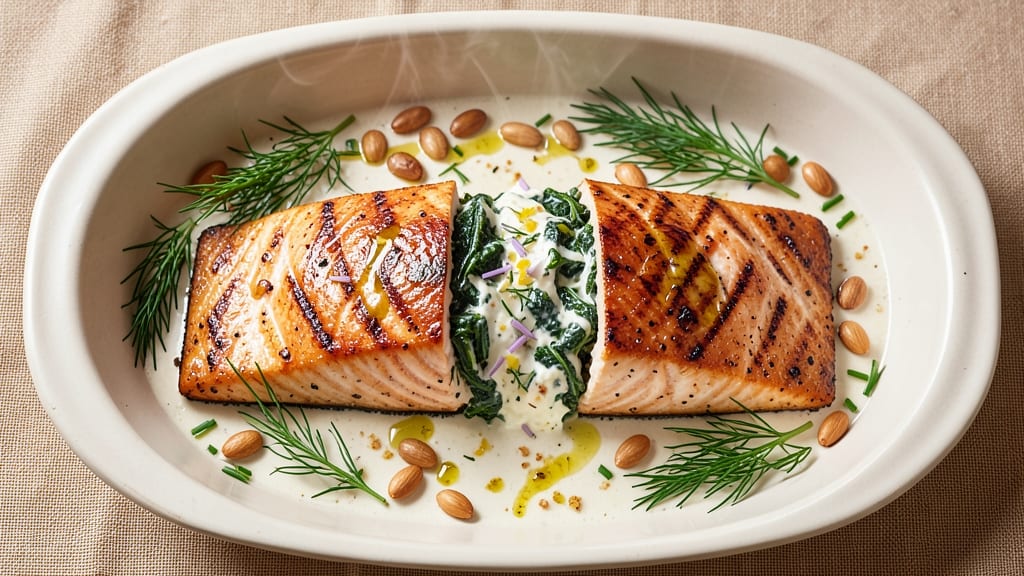
This baked salmon stuffed with spinach and cream cheese delivers restaurant-quality flakiness in just 20 minutes, transforming simple ingredients into a dish that feels luxurious.
The secret lies in the herbed cream cheese filling—rich, tangy, and perfectly balanced with earthy spinach—that melts into the salmon as it bakes, creating pockets of creamy goodness between every tender flake.
What makes this recipe work is the careful balance of textures: crispy skin on the outside, fluffy salmon inside, and a filling that stays creamy yet sets slightly for structure. No special techniques are required—just a sheet pan, a few fresh ingredients, and a 400°F oven to work its magic.
The dish comes together faster than takeout but tastes like it belongs on a fine-dining menu.
The result is a visually stunning plate with golden-brown salmon, vibrant green spinach peeking through the creamy filling, and a finish that’s both satisfying and elegant.
Each bite delivers the perfect harmony of textures—flaky salmon, velvety cream cheese, and bright spinach—making this an ideal weeknight dinner that feels special without requiring hours in the kitchen.
Serve with a side of roasted asparagus or a simple lemon wedge to cut through the richness, and you’ll have a meal that’s as impressive as it is delicious. Ready to master this technique? Let’s get started with the ingredients.
Ingredients for baked salmon stuffed with spinach and cream cheese
Twelve ingredients transform simple salmon into restaurant-quality flakiness with herbed cream cheese filling.
| Ingredient | Amount | Notes |
|---|---|---|
| Center-Cut Salmon Fillets 🐟 | 4 whole | Skin-on, 6-8 oz each |
| Full-Fat Cream Cheese 🧀 | 8 oz | Room temperature for blending |
| Fresh Baby Spinach 🌿 | 2 cups | Chopped, stems removed |
| Fresh Dill 🌿 | ¼ cup | Finely chopped, stems removed |
| Fresh Chives 🌿 | 2 tbsp | Minced for bright flavor |
| Extra-Virgin Olive Oil 🫒 | 1 tbsp | For skin crisping |
| Lemon Zest 🍋 | 1 tbsp | From 1 medium lemon |
| Garlic Cloves 🧄 | 2 cloves | Minced for aromatic base |
| Diamond Crystal Kosher Salt 🧂 | ¾ tsp | For seasoning and filling |
| Freshly Ground Black Pepper 🌶️ | ½ tsp | For seasoning |
| Unsalted Butter 🧈 | 1 tbsp | For skin finish |
| Lemon Juice 🍋 | 1 tbsp | Freshly squeezed |
The salmon quality makes or breaks this dish. Wild-caught Alaskan delivers the best texture, but Atlantic farmed works if you're on a budget. Look for fillets with vibrant pink flesh and minimal bruising—Whole Foods or Trader Joe's carry excellent options. The skin should be intact and slightly glossy, indicating freshness. If using frozen, thaw overnight in the fridge, never at room temperature. For the cream cheese, Philadelphia brand is ideal, but any full-fat variety will work—just ensure it's room temperature when mixing with herbs.
No fresh dill? Dried dill at one-third the amount works in a pinch, but fresh delivers that bright, clean flavor. The spinach can be swapped for arugula or kale, but baby spinach stays tender during baking. For extra richness, add 1 oz of goat cheese to the filling. If you're avoiding dairy entirely, vegan cream cheese (like Kite Hill) maintains the texture. The lemon zest can be replaced with 1 tsp of lemon extract, though fresh zest adds complexity. For a milder flavor, reduce the garlic to 1 clove or use garlic powder at half the amount.
Prep the salmon and filling components separately to streamline assembly. Store the prepared filling in an airtight container for up to 2 days in the fridge before stuffing. The stuffed salmon holds well for 1 day before baking—just keep the filling and salmon separate until ready to assemble. Baked salmon reheats beautifully; cover with foil and warm in a 300°F oven for 10 minutes. For meal prep, bake an extra fillet and store for 2 days—reheat gently to maintain moisture.
Why You'll Love This Recipe
- No-Fuss Prep: I swear by this recipe because it’s the kind of dish that feels like a hug—no one’s chopping for hours here. Just open the cream cheese, wilt the spinach in a pan (or microwave, no judgment), mix in the dill and chives, stuff it into the salmon, and pop it in the oven. Honestly, the hardest part is deciding whether to use a knife or your fingers to spread that creamy filling.
- Creamy-Crispy Magic: That contrast? Chef’s kiss. The salmon gets perfectly crispy on the outside while staying tender inside, and the cream cheese-spinach filling melts into a luscious, herby center. Between us, the full-fat cream cheese makes all the difference—it’s rich enough to hold its shape but creamy enough to blend into the salmon like a dream.
- Weeknight to Dinner Party: I make this for lazy Mondays when I don’t want to think, and it somehow still feels fancy enough for when my in-laws drop by. The spinach adds a touch of green that makes it look restaurant-worthy, and the dill-chive finish gives it that bright, fresh vibe. Plus, it’s one of those dishes that tastes even better the next day—so it’s my go-to for meal prep lunches.
- Leftovers That Don’t Suck: Most stuffed salmon recipes leave you with sad, dry fish the next day. Not this one. The cream cheese keeps it moist, and the spinach stays vibrant (no wilted greens here). I’ll often bake two fillets just to have a foolproof lunch ready—reheat it gently, and it’s like you’re eating it fresh. Budget win, too: full-fat cream cheese stretches further than you’d think, and salmon on sale? Even better.
Step-by-step instructions for baked salmon stuffed with spinach and cream cheese
Master this technique and you'll achieve perfectly flaky salmon with a rich, herbed cream cheese filling every time.
Prepare the Herbed Cream Cheese Filling
In a medium bowl, combine the 8 oz full-fat cream cheese with the 2 cups chopped fresh baby spinach, 0.25 cup finely chopped fresh dill, 2 tbsp minced fresh chives, 1 tbsp lemon zest, 2 cloves minced garlic, 0.75 tsp Diamond Crystal kosher salt, and 0.5 tsp freshly ground black pepper. Using a fork, gently mix until just combined—you want to preserve the texture of the spinach rather than overwork the mixture.
This filling should be thick but spreadable, with visible flecks of herbs throughout. If it feels too stiff, add 1 tbsp lemon juice and mix again. The acidity from the lemon will help balance the richness of the cream cheese, creating a bright, herbaceous filling that complements the salmon beautifully.
Create Pockets in the Salmon Fillets
Preheat your oven to 400°F and line a baking sheet with parchment paper. Place each of the 4 whole center-cut salmon fillets (skin-side down) on the prepared sheet. Using a sharp knife, carefully make a horizontal cut about 1.5 inches deep along the center of each fillet, stopping just before you reach the skin. This creates a pocket without compromising the structural integrity of the fish.
Gently open each fillet to form a pocket and spoon approximately 2 tablespoons of the herbed cream cheese filling into each. Press the filling lightly to ensure it stays in place. The pockets should be snug but not overstuffed—this prevents the filling from spilling out during baking and ensures even cooking.
Season and Crisp the Salmon Skin
Drizzle 1 tbsp extra-virgin olive oil evenly over the exposed salmon flesh, then sprinkle lightly with an additional pinch of kosher salt and black pepper. The oil will help create a crispy skin while keeping the flesh moist. Place 1 tbsp unsalted butter on top of each fillet, allowing it to melt slightly and baste the skin as it bakes.
Bake the salmon for 12-15 minutes, depending on thickness, until the skin is deep golden brown and crispy, and the internal temperature reaches 145°F when measured with an instant-read thermometer. The filling should be warm but not runny—this indicates the salmon is perfectly cooked. If the filling begins to brown too quickly, tent the salmon loosely with foil for the last 2-3 minutes of baking.
Rest and Serve for Maximum Flakiness
Remove the salmon from the oven and let it rest on the baking sheet for 5 minutes. This resting period allows the juices to redistribute throughout the fillets, ensuring each bite is moist and tender. The filling will also firm up slightly, making it easier to serve without spillage.
To serve, gently slide a thin spatula under each fillet to lift it from the skin, then transfer to a warmed plate. The skin should peel away cleanly, revealing the flaky, herbed salmon beneath. Garnish with an additional sprinkle of fresh dill and a drizzle of lemon juice for brightness. Serve immediately with your choice of sides—roasted vegetables or a fresh salad pair beautifully with this dish.
Pro Tips For Making Baked Salmon Stuffed With Spinach And Cream Cheese
- Preheat Like It’s 1999: Your oven’s gonna be hot—425°F (220°C) for this dish. I learned this the hard way: skipping the preheat means the salmon steams instead of sears, and you’ll end up with sad, gray fish. Give it 10 minutes while you prep the filling, and don’t peek. The oven’s not a microwave.
- Wilt Spinach Cold: Dump that baby spinach straight from the fridge into the pan with the cream cheese—no thawing or pre-warming needed. Hot pans + cold greens = perfect wilting without turning to mush. (Yes, even if you’re impatient like me.) If you’re using frozen, drain all the water first or your filling will swim like a sad soup.
- Don’t Overstuff the Salmon: The filling should hug the fish, not bulge like a Thanksgiving turkey. Too much cream cheese-spinach mix will leak out during baking, and you’ll end up with a greasy mess instead of a clean, elegant dish. Aim for a ¼-inch layer—enough to taste, not enough to drown.
- Sear the Skin First: Flip the salmon skin-side down on a hot, oiled pan for 2 minutes before baking. The crust will hold together better, and the skin won’t stick like glue to your sheet pan. (Pro move: Use a fish spatula or parchment paper to flip—no one wants to fight with salmon.) If your fillets are thin, skip this and bake skin-side up directly.
Make-ahead tips for this recipe
Prep Ahead Strategy
Assemble the herbed cream cheese filling up to 2 days in advance and store it in an airtight container in the fridge. This allows the flavors to meld beautifully, and you can simply spoon it into the salmon pockets when ready to bake.
I always prep the filling first thing in the morning so it's ready for a quick weeknight dinner. 💫
Salmon Prep Timeline
Pat the salmon fillets dry with paper towels and store them uncovered on a plate in the fridge for up to 12 hours before baking. This step is crucial for achieving crispy skin—drying the surface removes excess moisture.
Keep the filling and salmon separate until you're ready to stuff and bake. This prevents the salmon from absorbing any filling flavors prematurely.
Baking Day Assembly
On baking day, let the salmon sit at room temperature for 15-20 minutes before stuffing and baking. This ensures even cooking throughout the fillet. Preheat your oven to 400°F while the salmon comes to temperature.
I like to set a timer for 10 minutes of preheating so everything's ready simultaneously. This makes the whole process feel seamless.
Storage Solutions
Stuffed salmon can be refrigerated for up to 1 day before baking, but I recommend baking it fresh for the best texture. If you need to store leftovers, place them in an airtight container and refrigerate for up to 2 days.
The filling will firm up slightly, making it easier to slice and serve. When reheating, cover with foil and warm in a 300°F oven for 10 minutes to maintain moisture.
Freezing Guidelines
While this dish isn't ideal for freezing due to texture changes, you can freeze the unstuffed salmon and filling separately. Wrap the salmon in plastic wrap and store in a freezer bag for up to 1 month.
Freeze the filling in a separate airtight container. Thaw everything overnight in the fridge before assembling and baking. The texture won't be quite as perfect as fresh, but it's still delicious. 🧊
Meal Prep Hack
Double the recipe and bake an extra fillet for easy lunches. Store the baked salmon in an airtight container with a paper towel on top to absorb any moisture. Reheat gently in the oven or microwave for 1-2 minutes with a splash of water to maintain flakiness.
I love packing this for work—it's like a fancy restaurant meal without the wait! ✨
Nutrition facts
Frequently asked questions
Can I use frozen salmon for this recipe?
Yes, but thaw it properly first! Place frozen salmon in the fridge overnight (about 12-24 hours) for even thawing. Never use cold water or microwave—this creates uneven cooking. Pat the fillets completely dry before making the pockets to ensure crispy skin. The texture will be slightly less perfect than fresh, but still delicious.
What if my cream cheese filling gets too runny when baking?
This usually happens if the filling is too warm. To fix it, chill the stuffed salmon in the fridge for 15-20 minutes before baking, or reduce your oven temp to 375°F. For next time, add 1 tbsp cornstarch to the filling mixture to help it set better during baking. The filling should be warm but still hold its shape when done.
Can I make this recipe without fresh herbs?
Use 1 tsp dried dill and 1 tsp dried chives instead of fresh, but reduce the amount by one-third. For extra flavor, add 1/2 tsp dried lemon zest or a pinch of citric acid. The dish will still taste great, though fresh herbs add that bright, vibrant flavor that makes this recipe special.
How do I know when the salmon is fully cooked?
Use an instant-read thermometer to check the internal temperature—it should reach 145°F in the thickest part. The skin should be deep golden brown and crispy, while the flesh will flake easily with a fork. If the filling starts browning too quickly, tent the salmon with foil for the last 2-3 minutes to prevent overcooking.
What are the best sides to serve with this dish?
This rich salmon pairs beautifully with light, fresh sides. Try roasted asparagus with lemon zest, a simple arugula salad with balsamic vinaigrette, or steamed green beans with garlic. For a heartier meal, serve with quinoa or crusty bread to soak up any extra filling. The acidity from lemon or vinegar helps cut through the creaminess.