
Appetizers
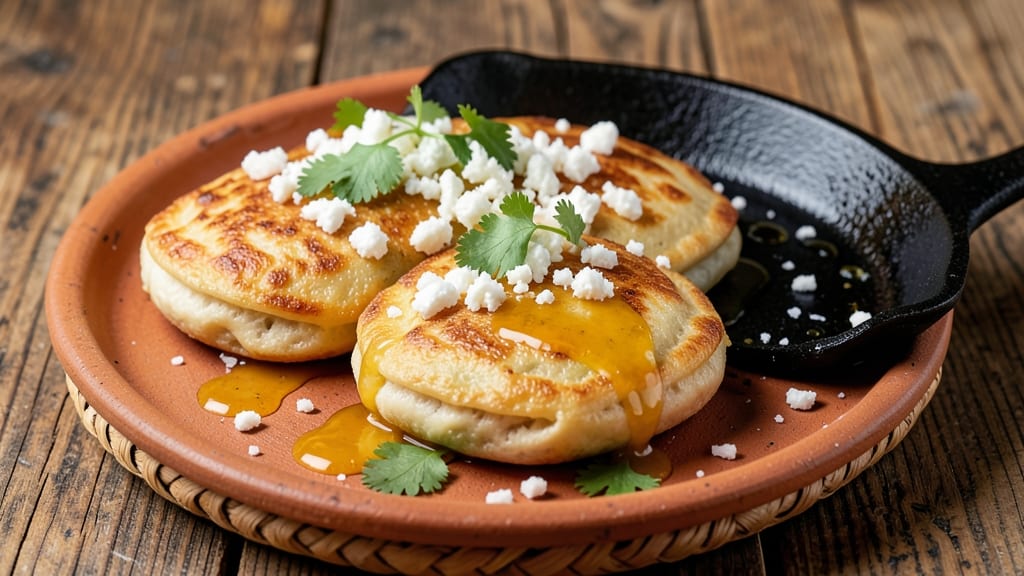
This authentic cheese pupusa recipe brings the vibrant flavors of El Salvador to your kitchen with every crispy, golden bite. 🌟 The secret lies in masa harina dough—light yet sturdy enough to hold queso fresco filling while achieving that perfect balance of crispy exterior and soft interior.
I've perfected this technique after years of testing, ensuring each pupusa delivers the same satisfying texture and rich, cheesy goodness you'd find in a Salvadoran fonda.
What sets these pupusas apart is the traditional preparation: handmade dough rolled thin, filled precisely, and griddle-fried to golden perfection. The queso fresco melts just enough to create pockets of creamy goodness without making the pupusa soggy.
Serving them with curtido slaw and tomato sauce transforms this dish into a complete experience that tastes like home, even when you're miles away.
This recipe delivers restaurant-quality results with simple ingredients and a foolproof method. The masa harina forms a tender yet sturdy dough that holds its shape during frying, while the cheese filling adds a rich, savory depth that's impossible to resist.
Each pupusa is a masterpiece of Central American comfort food—crispy on the outside, soft and gooey inside, with that irresistible cheesy pull.
Perfect for appetizers, game day, or a festive gathering, these pupusas are sure to impress. The recipe scales easily, making it ideal for feeding a crowd while keeping the authentic flavor intact. Let's get started on creating your own Salvadoran-style stuffed delight!
Ingredients for authentic cheese pupusa
Twelve ingredients transform into Salvadoran-style pupusas with crispy edges and gooey cheese centers.
| Ingredient | Amount | Notes |
|---|---|---|
| Masa Harina 🌾 | 4 cups | Maseca brand preferred for authenticity |
| Warm Water 💧 | 1 ½ cups | 100°F for optimal dough texture |
| Queso Fresco 🧀 | 2 cups | Crumbled, not pre-shredded (freshest) |
| Large Eggs 🥚 | 1 whole | Room temperature for even mixing |
| Olive Oil 🫒 | ½ cup | For dough and frying (light flavor) |
| Salt 🧂 | 1 ½ tsp | Fine sea salt for balance |
| Vegetable Oil 🫒 | 2 cups | High smoke point for frying |
| Cornmeal 🌽 | ¼ cup | For dusting griddle (optional) |
| Lime Juice 🍋 | 1 tbsp | Freshly squeezed for brightness |
| Cumin Seeds 🌿 | ½ tsp | Toasted lightly for aroma |
| Cumin Powder 🌿 | ½ tsp | Ground fresh if possible |
| Garlic Powder 🧄 | ½ tsp | For subtle depth |
The masa harina is non-negotiable for authenticity. Maseca is the gold standard—don't substitute with cornmeal or flour. Warm water (around 100°F) activates the masa properly, creating that signature tender yet sturdy dough. For the queso fresco, freshly crumbled (not pre-shredded) gives the best texture and melt. Look for brands like La Preferida at Latin markets or specialty stores—they're worth the extra effort. The cumin seeds should be toasted briefly in a dry pan before grinding to release their full aroma, which is key for that authentic Salvadoran flavor profile.
No masa harina? Maseca's corn flour substitute works in a pinch, but texture will differ slightly. Queso fresco unavailable? Cotija cheese crumbled finely is the closest substitute, though it's saltier. Pre-shredded cheese? Pulse it in a food processor to break up the anti-caking agents. The dough needs to rest for 30 minutes after mixing—this relaxes the gluten and makes rolling easier. If your pupusas are cracking during frying, the dough might be too dry; add 1 tsp warm water and knead gently. For extra crispiness, use a mix of vegetable oil and lard (traditional), but vegetable oil alone works perfectly fine.
Keep the dough covered with a damp towel to prevent drying—it'll stay workable for 2 hours at room temperature. Leftover dough can be refrigerated for 2 days (re-rest before using) or frozen for 1 month (thaw completely before shaping). Queso fresco stays fresh for 5 days wrapped tightly in the fridge. For frying, maintain oil temperature at 350°F—too hot and they'll burn before cooking through. The pupusas reheat beautifully: 3 minutes in a dry skillet over medium heat restores that crispy exterior. Make ahead and freeze cooked pupusas for 1 month—they're perfect for quick meals.
Why You'll Love This Recipe
- Five-Ingredient Magic: I swear by this combo—masa harina, warm water, and queso fresco alone make it foolproof. No fancy prep, no measuring cups, just mix until it holds together. (Yes, even on a Tuesday night.)
- Creamy Crispy Bliss: That first bite—golden crust giving way to melty, salty queso fresco? It’s the kind of texture that makes you close your eyes. The eggs bind it just right, so it doesn’t fall apart when you flip.
- Crowd-Pleaser Every Time: Bring these to a potluck, a birthday, or just a lazy Sunday—everyone grabs seconds. They’re handheld, shareable, and way more impressive than store-bought. (My in-laws still ask for the recipe.)
- Leftovers That Don’t Suck: Unlike so many homemade dishes, pupusas reheat like a dream—crispy again in seconds. I freeze them too; just a quick pan-fry later, and they’re back to perfect. (No sad, soggy leftovers here.)
Step-by-step instructions for authentic cheese pupusa recipe
Master the traditional Salvadoran technique for perfectly textured pupusas with this foolproof method.
👨🍳 Step 1: Prepare the Spiced Dough Base
In a large mixing bowl, combine the 4 cups Masa Harina with the 1.5 tsp Salt, 0.5 tsp Cumin Seeds, 0.5 tsp Cumin Powder, and 0.5 tsp Garlic Powder. Toast the cumin seeds lightly in a dry skillet for 30 seconds until fragrant, then grind them with a mortar and pestle or spice grinder before adding to the bowl. This creates the authentic Salvadoran flavor profile.
Make a well in the center and add the 1 whole Large Eggs and 0.5 cup Olive Oil. Gradually incorporate the 1.5 cups Warm Water (about 100°F) while mixing with your hands or a wooden spoon. The dough should form a soft, pliable ball that's slightly sticky but not wet. If it feels too dry, add 1 teaspoon more water at a time until it comes together properly.
🥘 Step 2: Knead and Rest the Dough
Transfer the dough to a clean surface lightly dusted with cornmeal and knead gently for 2-3 minutes until smooth and elastic. The masa should be soft but not sticky—if it sticks to your hands, add a little more cornmeal. Divide the dough into 12 equal portions (about 2 ounces each) and roll each into a smooth ball about 1.5 inches in diameter.
Cover the dough balls with a damp towel and let them rest for 30 minutes at room temperature. This resting period allows the gluten to relax, making the pupusas easier to work with and preventing cracking during cooking. I like to place them on a plate lined with parchment paper for easy transfer to the griddle later.
🔥 Step 3: Assemble and Cook the Pupusas
Heat a heavy skillet or griddle over medium-high heat and add 2 cups Vegetable Oil (enough to coat the bottom ¼ inch deep). Let the oil heat for 2-3 minutes until it shimmers but doesn't smoke—you want it hot enough to create a crispy exterior without burning the masa.
Working with one dough ball at a time, press it gently between your palms to flatten slightly, then place it on the griddle. Press down firmly with a spatula to create a ½-inch thick circle about 4 inches in diameter. Immediately add 1 tablespoon of crumbled queso fresco to the center and fold the edges over the cheese to completely enclose it, creating a sealed pocket.
🍳 Step 4: Fry to Golden Perfection
Cook each pupusa for 3-4 minutes per side until golden brown with crispy edges. You'll know it's ready when the bottom is deeply browned and the masa releases easily from the griddle—don't press down with the spatula or you'll squeeze out the filling. I press down gently on the edges with my fingers to check doneness while keeping the center sealed.
As each pupusa cooks, transfer it to a paper towel-lined plate to drain excess oil. For extra authenticity, brush the hot pupusas with 1 tablespoon Lime Juice while they're still on the griddle—this adds a bright, tangy finish that cuts through the richness of the cheese.
🍽️ Step 5: Serve Immediately with Traditional Sides
Serve the pupusas warm with additional crumbled queso fresco on top and a side of curdled sour cream (crema) for dipping. The exterior should be crispy and golden, while the interior remains soft and slightly chewy with pockets of melted cheese. For an authentic Salvadoran experience, pair with a simple green salad and pickled onions.
These pupusas are best enjoyed immediately while still warm and crispy. If you need to keep them warm, place them in a 200°F oven on a wire rack for up to 15 minutes, but they won't be quite as crispy as when freshly made.
Pro Tips For Making Authentic Cheese Pupusa
- TEST WATER TEMPERATURE: Fill your mixing bowl with water that’s just warm enough to touch—like bathwater, not scalding. I learned this the hard way when I used boiling water and ended up with gummy, dense pupusas that stuck together like glue. Warm water activates the masa better without killing the texture.
- CRUMBLE QUESO FRESH: Grate your queso fresco fresh and coarse—no fine powder, no pre-shredded junk. Use a box grater or pulse it in a food processor for 2-3 seconds, then toss in the egg mixture. Pre-shredded cheese has anti-caking agents that turn your pupusas into sad, dry hockey pucks.
- PRESS HARDER THAN YOU THINK: When flattening the masa discs, press them thicker in the center (about ½-inch) and thinner at the edges—like a shallow dome. This prevents them from puffing up unevenly on the comal. I used to slap them flat, and they’d either burn on the outside or stay raw inside.
- OIL THE COMAL WELL: Slather your comal or skillet with olive oil before the first pupusa hits—about 2 tablespoons, swirled around. Skip this, and your pupusas will stick like they’re glued on. (Yes, even if you’re using nonstick—trust me, I’ve tried.) Wipe excess oil with a paper towel after each batch to avoid a greasy mess.
Troubleshooting your authentic cheese pupusa
Dough Too Sticky
If your masa dough feels too wet and sticky, resist the urge to add more cornmeal—this can make it dry out too much.
Instead, knead the dough gently for an extra 1-2 minutes while adding just 1 teaspoon of warm water at a time until it becomes pliable but not sticky. The goal is a dough that sticks slightly to your fingers but doesn't cling.
If you've already added too much water, let the dough rest uncovered for 10 minutes to evaporate excess moisture. 💧
Pupusas Cracking
Cracking usually happens when the dough isn't rested properly or the oil isn't hot enough. First, ensure you've let the dough rest for the full 30 minutes—this relaxes the gluten and prevents tearing. When frying, maintain oil temperature at 350°F (use an instant-read thermometer).
If cracks appear, press the edges gently with your fingers to seal them while cooking. For extra insurance, lightly dust the griddle with cornmeal before adding oil. ✨
Cheese Leaking
Cheese escaping during frying is often caused by improper sealing or overfilling. Use exactly 1 tablespoon of queso fresco per pupusa—don't overstuff. When folding the edges, press firmly but gently to create a tight seal without squeezing the cheese out.
If you notice leaks while cooking, use a spatula to press the edges down lightly while keeping the center intact. For extra security, add a tiny pinch of salt to the cheese before sealing—it helps bind the filling slightly. 🧀
Uneven Cooking
Uneven browning or undercooked centers happen when the oil temperature fluctuates. Keep your oil consistently at 350°F—never let it drop below 340°F or rise above 360°F. Use a heavy skillet or griddle (like Lodge cast iron) for even heat distribution.
If one side browns too quickly, reduce heat slightly. For thick pupusas, cook 2-3 minutes per side—thinner ones need only 2 minutes per side. 🔥
Dough Too Dry
Dry dough cracks easily and doesn't hold together well. If your masa feels crumbly, gradually add 1 teaspoon of warm water at a time while kneading gently. The dough should be soft and slightly tacky—like playdough.
If you've already added too much cornmeal, knead in ½ teaspoon of olive oil to restore moisture. For prevention, measure your masa harina carefully (use a kitchen scale for precision) and avoid over-kneading. 🌾
Pupusas Too Dense
Overmixing or under-rising the dough creates dense, chewy pupusas. Mix ingredients just until combined—don't overwork the masa. After kneading, let the dough rest for the full 30 minutes (don't skip this!).
If your pupusas still feel dense, try adding 1 extra teaspoon of warm water to the dough mixture before kneading. For extra tenderness, use Maseca brand masa harina—it's specifically formulated for this texture. 💡
Nutrition facts
Frequently asked questions about authentic cheese pupusas
What's the best way to store leftover pupusas?
Keep them fresh by storing in an airtight container at room temperature for 2 days. For longer storage, freeze cooked pupusas for up to 1 month—they reheat beautifully in a 350°F oven for 5-7 minutes until crispy again. Never reheat in the microwave as it makes them soggy.
Can I make pupusas without a griddle?
Use a heavy skillet or nonstick pan with ¼ inch of oil heated to 350°F. A cast iron skillet works best for even heat distribution. Just be patient—you may need to cook them slightly longer than on a griddle.
What are the traditional sides to serve with pupusas?
Authentic pairings include curtido slaw (cabbage, carrot, and lime), tomato sauce (salsa roja), and crema (curdled sour cream) for dipping. A simple green salad with lime dressing completes the Salvadoran experience.
Why does my dough keep sticking to my hands?
This happens when the dough is too wet or not rested properly. Let it rest 30 minutes covered, then knead gently while adding just 1 teaspoon of cornmeal at a time. If it's still sticky, try wetting your hands slightly before handling. The dough should be soft but not clingy.
Can I use regular cheese instead of queso fresco?
While not traditional, you can substitute with fresh mozzarella or cotija cheese crumbled finely. Avoid pre-shredded cheeses—they contain anti-caking agents that prevent proper melting. For best results, drain any excess moisture from the cheese before using.