
Appetizers
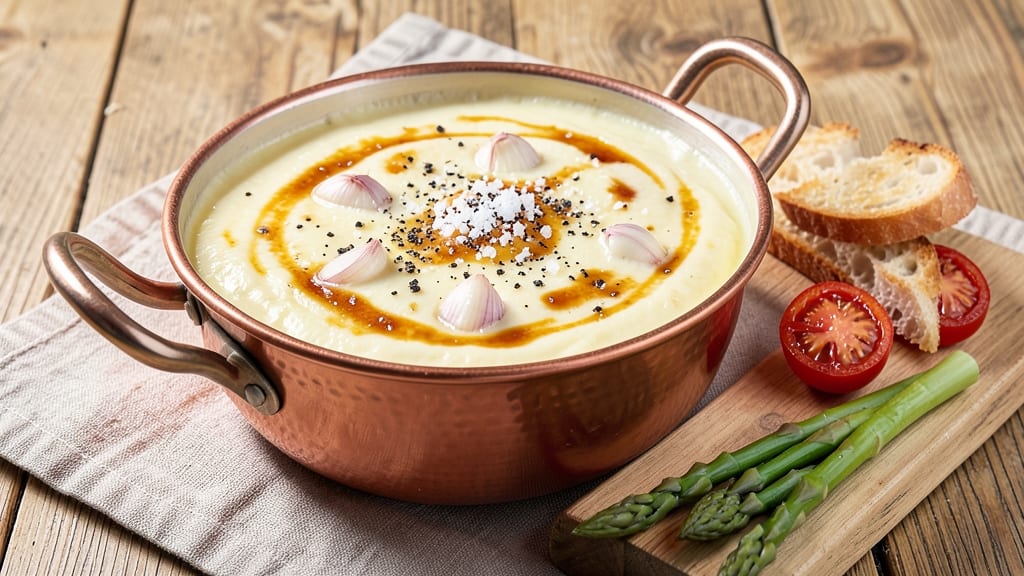
Asiago cheese fondue transforms a simple gathering into an elegant, interactive dining experience—creamy, golden, and impossible to resist. ✨ The secret lies in balancing sharp Asiago with white wine and a touch of garlic for depth, creating a sauce that melts effortlessly into velvety perfection while maintaining structure. Unlike overly rich cheeses, Asiago delivers a bright, nutty flavor that pairs beautifully with crusty bread, apples, and even pretzels.
This recipe simplifies the classic fondue process without sacrificing authenticity. You'll use a fondue pot or slow cooker to maintain a consistent 125°F temperature—hot enough to keep the cheese molten but cool enough to prevent scorching.
The key is stirring frequently and adding a splash of wine or broth as needed to prevent separation, ensuring every dip delivers that signature creamy pull.
What you'll end up with is a warm, bubbling pot of golden fondue that's rich yet balanced, with a texture so smooth it practically melts on the tongue.
The Asiago's nutty notes shine through while white wine adds a subtle tang, creating a sauce that's versatile enough for both traditional and modern pairings. Whether you're hosting a cozy night in or a festive gathering, this fondue brings warmth and connection to the table.
Serve with an assortment of dippers—crusty baguette slices, apple wedges, and marinated vegetables—to keep everyone engaged. The recipe scales easily, making it perfect for small groups or larger crowds, and leftovers reheat beautifully. Here's how to create this crowd-pleasing centerpiece that's simpler than it looks.
Ingredients for asiago cheese fondue
Six ingredients melt into velvety fondue perfection—creamy Asiago meets crisp dippers for a crowd-pleasing centerpiece.
| Ingredient | Amount | Notes |
|---|---|---|
| Asiago Cheese, Grated 🧀 | 1 ½ lbs | Freshly grated from block |
| Dry White Wine 🍷 | 1 cup | Sauvignon Blanc or Pinot Grigio |
| Garlic Cloves 🧄 | 4 cloves | Fresh, minced for depth |
| All-Purpose Flour 🌾 | 2 tbsp | For thickening consistency |
| Kosher Salt 🧂 | 1 tsp | Diamond Crystal preferred |
| Ground Black Pepper 🌶️ | ½ tsp | Freshly cracked for warmth |
| Extra-Virgin Olive Oil 🫒 | 1 tbsp | For glossy finish |
| Honeycrisp Apples 🍎 | 2 whole | Tart variety for balance |
| Crusty Baguette 🍞 | 1 whole | Sliced into 1-inch pieces |
| Pretzel Rods 🥨 | 1 package | Baked until crisp |
| Vegetable Broth 🥫 | ½ cup | For thinning if needed |
The Asiago is non-negotiable here—look for aged Asiago (not young) at specialty cheese shops or the deli section of Whole Foods. Pre-grated cheese is a no-go; it gets clumpy and lacks that signature nutty depth. If you can't find aged Asiago, Parmigiano-Reggiano works in a pinch, but the fondue will be more neutral. The white wine should be dry and crisp—Sauvignon Blanc or Pinot Grigio from the store's wine section (no cooking wine!). For garlic, fresh is a must—jarred minced garlic adds a metallic aftertaste that ruins the delicate balance.
No white wine? Dry vermouth or apple cider works in a pinch, but the fondue will taste more herbal. Substituting flour? Cornstarch at half the amount gives a smoother texture, though it lacks the fondue's signature slight thickness. Apples? Fuji or Gala are fine, but Honeycrisp's tartness cuts through the richness beautifully. The baguette should be crusty and slightly stale—fresh bread gets soggy. For pretzels, Trader Joe's or Costco have the best pre-baked rods that stay crisp even after dipping. And if your fondue gets too thick? A splash of warm vegetable broth (not water) saves it every time.
Fondue reheats beautifully—just stir in a splash of wine or broth to loosen it up. Keeps 3-4 days in the fridge, covered tightly. For serving, use a fondue pot with a 125°F thermometer—no thermometer? Test with a spoon: if it's too hot to hold for 10 seconds, it's too hot. The cheese will separate if it gets too hot, and there's no fixing it. Leftovers? Portion into small containers and freeze for up to 3 months. Just thaw in the fridge overnight before reheating.
Why You'll Love This Recipe
- Same recipe, two vibes: Dip crusty bread for a lazy Tuesday or serve with charcuterie for guests. (Yes, even on a Tuesday night.) The fondue thickens perfectly—no lumps, no thin soup—so it works for both.
- No Fuss Setup: I swear by this fondue because it’s literally five ingredients—just melt the cheese with wine, a pinch of flour, and crushed garlic. No whisking, no straining, no stress. My slow cooker does all the work while I pour the wine.
- Nutty, Tangy Magic: That aged Asiago? It’s the star—rich, slightly sweet, with a sharp bite that cuts through the wine’s brightness. The garlic? Just a whisper, but it transforms the whole thing into something dangerously addictive.
- Weeknight or Party: Same recipe, two vibes: Dip crusty bread for a lazy Tuesday or serve with charcuterie for guests. (Yes, even on a Tuesday night.) The fondue thickens perfectly—no lumps, no thin soup—so it works for both.
Step-by-step instructions for Asiago cheese fondue
Here's how to craft velvety Asiago fondue with perfect balance and rich depth.
🍳 Step 1: Toast the Garlic and Flour for Depth
Heat a heavy-bottomed saucepan over medium-low heat and add the 1 tablespoon extra-virgin olive oil. Once shimmering, add the 4 cloves minced garlic and cook for 1-2 minutes until fragrant but not browned—just golden around the edges. This step builds aromatic complexity without bitterness.
Immediately whisk in the 2 tablespoons all-purpose flour and cook for another 30 seconds while stirring constantly. You're creating a light roux that will thicken the fondue beautifully. Watch carefully—it should smell nutty and toasty, not burnt. Remove from heat once you see the flour fully incorporated into the oil.
🍷 Step 2: Build the Fondue Base with Wine
Return the pan to medium heat and slowly pour in the 1 cup dry white wine, whisking constantly to prevent lumps. Let it simmer gently for 3-4 minutes until reduced by about half—you'll see the wine clinging to the pan bottom. This reduction concentrates the flavors and removes any alcohol sharpness.
Here's the thing—don't rush this step. The wine needs time to cook down properly. If it boils too vigorously, the fondue will develop a raw flour taste later. You're aiming for a syrupy consistency where the wine has nearly evaporated but hasn't turned to paste.
🧀 Step 3: Melt the Asiago Gradually
Reduce heat to low and begin adding the 1.5 lbs freshly grated Asiago cheese in batches. Start with ½ cup at a time, whisking vigorously after each addition until completely melted before adding more. This gradual approach prevents clumping and ensures a silky texture.
I like to use a wooden spoon for this—it helps scrape up any cheese stuck to the pan bottom. The fondue should begin to thicken noticeably as the cheese melts. If it gets too thick, add 1 tablespoon vegetable broth at a time until you reach a smooth, dip-able consistency. The final texture should coat the back of a spoon but still flow freely.
🍎 Step 4: Season and Prepare the Dippers
Remove the fondue from heat and stir in the 1 teaspoon kosher salt and ½ teaspoon freshly cracked black pepper. Taste and adjust seasoning—you might need a bit more salt to balance the cheese's richness. The fondue should taste deeply cheesy with a bright, wine-infused finish.
While the fondue rests (it'll thicken slightly as it cools), prepare your dippers. Slice the crusty baguette into 1-inch pieces and toast them lightly in a 375°F oven for 5 minutes until golden. Peel and core the Honeycrisp apples, then cut them into ½-inch thick slices. Arrange everything on a serving platter around the fondue pot.
⏰ Step 5: Serve with Perfect Temperature Control
Transfer the fondue to a fondue pot or heatproof serving dish and keep it warm over a low flame or 150°F setting. The ideal serving temperature is between 160-170°F—hot enough to melt the cheese on bread but not so hot it burns your mouth.
Here's my pro tip: If the fondue thickens too much during serving, thin it with 1 tablespoon vegetable broth at a time. The combination of crispy pretzel rods, toasted baguette, and sweet-tart apple slices with this rich Asiago fondue creates the perfect balance of textures and flavors. Serve immediately while the bread stays crisp and the fondue maintains its velvety texture.
Pro Tips For Making Asiago Cheese Fondue
- Bloom the Garlic: Toss those minced garlic cloves into the wine first—let them steep for 2 minutes before adding the cheese. I used to add it last, and the fondue always tasted like garlic had an afterthought. This step pulls out the sweetness without bitterness, and the cheese melts smoother.
- Grate the Cheese Fresh: Skip the pre-grated Asiago—it’s packed with anti-caking agents that turn fondue into a grainy mess. Use a box grater or food processor right before melting, and sift out any large clumps. Trust me, the extra 5 minutes saves you from scraping cheese off the fondue pot later.
- Whisk Like Your Life Depends on It: The moment the cheese hits the pot, whisk constantly over medium-low heat. I learned this after watching a batch of fondue turn into a sad, clumpy lump. Keep the motion steady—no breaks—until it’s silky. If it looks thick, add a splash of wine, not milk (it’ll make the fondue taste flat).
- Salt the Wine First: Toss in all the kosher salt with the wine before heating—it dissolves better and seasons the cheese evenly. I used to add salt at the end, and the fondue always tasted like some parts were bland while others were overpowering. A pinch here saves you from guessing later.
Pro cooking tips for this recipe
Cheese Melting Secrets
Freshly grated Asiago is non-negotiable for this recipe—pre-shredded cheese contains anti-caking agents that make fondue grainy. Use a box grater or food processor with a grating attachment, and grate the cheese right before cooking.
I like to mix in ½ teaspoon of cornstarch with the cheese to prevent separation during melting. This trick works especially well if you're using a slow cooker for serving. 🧀
Temperature Control
Maintaining the fondue at 160-170°F is crucial—too hot and it burns, too cool and it thickens into a paste. I recommend using a fondue thermometer like the Ozeri Touchstone for precise readings.
If you don't have one, test with a spoon: it should feel warm but not hot enough to scald your tongue. For even heat distribution, place the fondue pot on a ceramic fondue burner or use a slow cooker on "warm" setting.
Wine Reduction
Never skip the wine reduction step—this is where the magic happens. The wine should reduce by about half (from 1 cup to ½ cup) before adding cheese. If you're using a cooking wine substitute, add 1 teaspoon of lemon juice to mimic the acidity.
For extra depth, deglaze the pan with 2 tablespoons of white wine after removing the fondue from heat and stir it back in before serving. 🍷
Preventing Separation
If your fondue starts separating, don't panic—it's fixable! Remove from heat immediately and whisk in 1 tablespoon of warm vegetable broth at a time until smooth. For future prevention, always melt the cheese gradually in batches, whisking vigorously between additions.
Another pro tip: Add 1 teaspoon of Dijon mustard to the wine mixture before reducing—it acts as an emulsifier and keeps the fondue silky.
Slow Cooker Hack
For effortless serving, transfer the completed fondue to a 3.5-quart slow cooker and keep it on "warm" setting. The slow cooker's gentle heat maintains perfect temperature without risk of scorching. I like to use a stoneware fondue pot inside the slow cooker for easy serving.
Just stir occasionally and add a splash of wine if it thickens. This method is perfect for large groups where you want to avoid constant stirring.
Dippers That Work
Beyond the classic baguette, try water crackers for a delicate crunch or baked potato wedges for heartier dippers. For a sweet contrast, add candied pecans or dried apricots. I always include at least one vegetable option—endive leaves or jalapeño slices add freshness that cuts through the richness.
Arrange dippers on a slate board or wooden tray for an elegant presentation that keeps everyone engaged. 🍞
Nutrition facts
Frequently asked questions
Can I make this fondue without wine?
Replace the white wine with 1 cup dry apple cider or 1 cup vegetable broth for a non-alcoholic version. For extra depth, add 1 teaspoon lemon juice to mimic wine's acidity. The fondue will still develop that signature creamy texture, though the flavor profile will be slightly more neutral.
Why did my fondue separate?
Separation usually happens when the cheese gets too hot or isn't melted gradually. To fix it, remove from heat and whisk in 1 tablespoon warm vegetable broth at a time until smooth. For prevention, always melt the cheese in batches over low heat and stir constantly. Adding ½ teaspoon cornstarch to the grated cheese also helps stabilize the mixture.
What's the best way to keep the fondue warm during serving?
Use a fondue pot with a 150°F setting or transfer to a slow cooker on "warm". For even heat, place the pot on a ceramic fondue burner. The ideal serving temperature is 160-170°F—test with a spoon: it should feel warm but not scalding. Stir occasionally and thin with broth if it thickens.
Can I add other cheeses to this recipe?
Yes! For a richer fondue, mix in ½ cup grated Gruyère or ½ cup Parmesan with the Asiago. Avoid cheeses with high moisture (like brie) as they can make the fondue too runny. If you want a sharper flavor, add ¼ cup aged Gouda. Always grate fresh and add cheeses gradually while stirring.
How long will leftovers keep?
Store fondue in an airtight container in the fridge for 3-4 days. Reheat gently over low heat, stirring frequently and adding 1 tablespoon broth at a time until smooth. For longer storage, freeze portions for up to 3 months. Thaw overnight in the fridge before reheating—never microwave directly from frozen.