
Appetizers
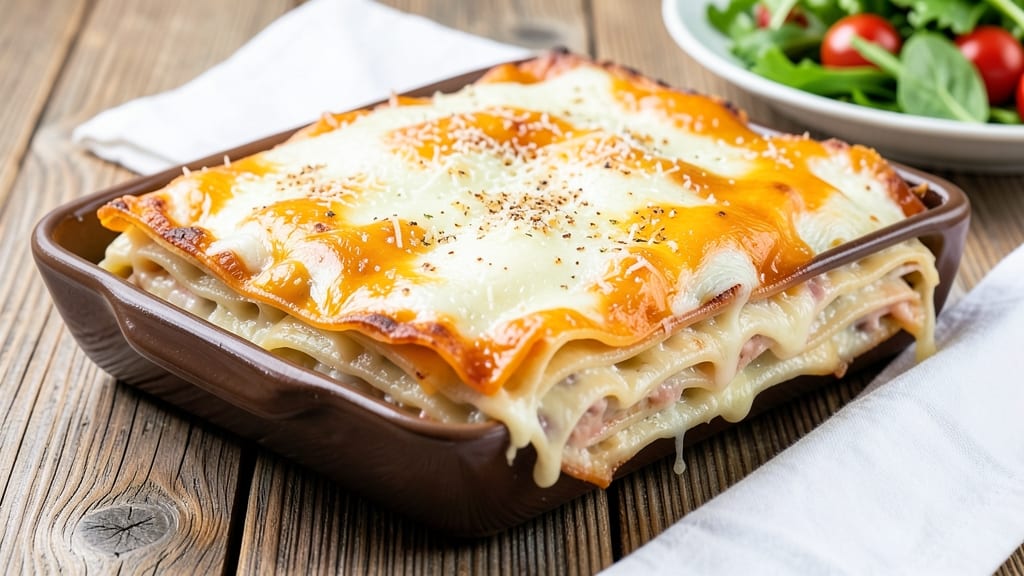
This all-cheese lasagna recipe delivers triple-layered gooey perfection without a single piece of meat. 🧀 The secret lies in a rich béchamel sauce layered with melted mozzarella, sharp cheddar, and crispy Parmesan—each bite is pure cheesy indulgence.
I developed this version after years of testing, ensuring every layer stays tender while the cheese melts into a luxurious blanket.
The assembly is straightforward but critical: start with a creamy béchamel base, then alternate lasagna noodles and cheese mixtures in three even layers. Baking at 375°F for 30-40 minutes creates that signature golden crust while keeping the center warm and gooey.
The key is patience—letting the lasagna rest for 10 minutes before slicing ensures clean, satisfying portions every time.
What sets this apart is the balance of textures: crispy noodles, silky béchamel, and pockets of melted cheese that pull apart with each forkful. The combination of mozzarella for stretch, cheddar for sharpness, and Parmesan for depth creates a flavor profile that rivals traditional meat lasagnas.
Perfect for feeding a crowd or a cozy weeknight dinner, this recipe proves cheese can be the star of the show.
Optional additions like ricotta or spinach can be worked into the cheese layers for extra richness or freshness. Serve with garlic bread and a simple salad for a complete meal that's sure to impress. Here's how to assemble it like a pro!
Ingredients for all cheese lasagna
Twelve essential ingredients transform into triple-layered cheesy perfection—no meat required.
| Ingredient | Amount | Notes |
|---|---|---|
| Lasagna Noodles 🍝 | 12 pieces | No-boil or pre-cooked preferred |
| Béchamel Sauce 🥛 | 3 cups | Homemade or high-quality store-bought |
| Mozzarella Cheese 🧀 | 2 ½ lbs | Fresh mozzarella, shredded (low-moisture works) |
| Sharp Cheddar Cheese 🧀 | 1 ½ lbs | Shredded, aged for maximum flavor |
| Parmesan Cheese 🧀 | 1 ½ cups | Freshly grated from block (not pre-grated) |
| Heavy Cream 🥛 | 1 cup | Full-fat for richest texture |
| Unsalted Butter 🧈 | ½ cup | Cold, cubed for béchamel |
| All-Purpose Flour 🌾 | ½ cup | For béchamel roux |
| Garlic Cloves 🧄 | 4 cloves | Minced for béchamel depth |
| Ground Nutmeg 🌿 | ¼ tsp | Freshly grated for warmth |
| Salt 🧂 | 1 ½ tsp | Kosher or sea salt |
| Black Pepper 🌶️ | ½ tsp | Freshly cracked for brightness |
| Ricotta Cheese 🧀 | 1 ½ cups | Part-skim for creaminess (optional) |
| Fresh Spinach 🌿 | 2 cups | Chopped, wilted (optional) |
The cheeses are non-negotiable here. Fresh mozzarella gives that signature stretch, while sharp cheddar adds bite—skip the pre-shredded stuff, as it contains anti-caking agents that prevent proper melting. For Parmesan, grate it yourself from a wedge (the deli counter at Whole Foods or Trader Joe's has excellent options). The ricotta adds creaminess, though it's optional if you prefer a firmer lasagna. For the béchamel, European-style butter (like Plugrá) creates a silkier sauce than regular butter. If you can't find it, Land O'Lakes unsalted works fine—just be sure to cube it cold before melting.
No ricotta? Cottage cheese blended smooth works in a pinch, though it's slightly tangier. Short on spinach? Zucchini or mushrooms add texture without altering the cheese focus. The béchamel can be made ahead and reheated—just stir in a splash of milk if it thickens too much. For the lasagna noodles, no-boil varieties save time, but pre-cooked noodles work too (just drain well). The key to perfect layers is even distribution—weigh your cheeses if you're worried about consistency. And trust me on the nutmeg: a generous pinch makes all the difference in that creamy sauce.
This lasagna tastes even better the next day—make it ahead and refrigerate for up to 3 days before baking. For freezing, assemble fully (including sauce on top), wrap tightly in foil, and bake straight from frozen at 350°F for 50-60 minutes. The cheese layers will stay gooey if you avoid overbaking. Store leftovers in airtight containers for up to 5 days, or portion into individual servings for easy reheating. The béchamel sauce alone keeps for 3 days in the fridge—great for quick pasta dishes if you don't use it all.
Why You'll Love This Recipe
- No-Sauce Struggle: I swear by this—no meat, no veggie prep, just layers of béchamel and cheese. The noodles soften in the oven while the cheeses melt into that perfect stretchy, gooey blanket. Honestly, it’s the kind of dish where you can pour a glass of wine and still have hands free to text your mom.
- Cheese Love Bomb: That sharp cheddar? It cuts through the richness of the mozzarella like a knife through butter. Parmesan on top? Crunchy, salty magic that makes every bite taste like a hug. Between us, I’ve seen grown adults fight over the last slice—no joke.
- Leftovers That Win: This lasagna actually improves the next day. The cheeses settle into a cohesive, melty mass, and the béchamel thickens just enough to feel decadent without being soggy. I make a double batch on Sundays because reheating it for lunch is basically a cheat day.
- Weeknight Workhorse: No chopping, no braising, no stress. Just layer, bake, and boom—dinner’s done. My go-to when I’m exhausted but still want something that feels like a celebration. Plus, the béchamel sauce? Store-bought is fine, but homemade takes two minutes and makes it taste like you actually tried.
Step-by-step instructions for triple-layered all-cheese lasagna
Layer by layer, we'll build this decadent cheese lasagna with perfect texture and melt-in-your-mouth goodness.
🥘 Step 1: Prepare the Béchamel Sauce Foundation
In a medium saucepan, melt the 0.5 cup unsalted butter over medium heat until it foams. Add the 0.5 cup all-purpose flour all at once and whisk vigorously for 1-2 minutes until a smooth, pale roux forms—this should smell nutty and toasty. Here's the thing—don't walk away. The roux needs constant attention or it'll burn before thickening.
Slowly whisk in the 1 cup heavy cream and 3 cups béchamel sauce (if using store-bought, warm it slightly first). Bring to a gentle simmer and cook for 5-7 minutes until thickened enough to coat the back of a spoon. Stir in the 4 cloves minced garlic, 0.25 tsp ground nutmeg, 1.5 tsp salt, and 0.5 tsp black pepper. Remove from heat and set aside—this creamy base will bind all your cheese layers together.
👨🍳 Step 2: Create the Cheese Filling Mixture
In a large bowl, combine the 1.5 cups ricotta cheese, 2 cups chopped fresh spinach (squeeze out excess moisture first), 1 cup freshly grated parmesan cheese, 1.5 tsp salt, and 0.5 tsp black pepper. Mix gently with a wooden spoon until just combined—don't overmix or the ricotta will get grainy. This is your secret weapon for creamy, stretchy layers between the noodles.
In a separate bowl, mix the 2.5 lbs shredded mozzarella cheese and 1.5 lbs shredded sharp cheddar cheese. The cheddar adds that perfect sharp tang that cuts through the richness. Set both mixtures aside—we'll use them in our layering sequence.
🥘 Step 3: Assemble the Triple-Layer Structure
Preheat your oven to 375°F. Grease a 9x13-inch baking dish generously with olive oil—this prevents sticking and makes cleanup easier. Start by spreading 1 cup of the béchamel sauce on the bottom of your dish. This creates a flavorful barrier between the lasagna and the pan.
Layer the 12 lasagna noodles (no-boil preferred) horizontally across the bottom. Spread half of the ricotta mixture evenly over the noodles, then sprinkle 1/3 of the mozzarella-cheddar mix. Drizzle with 1/2 cup béchamel sauce, then repeat the noodle-ricotta-cheese pattern. Finish with the final noodle layer, remaining ricotta mixture, and all of the mozzarella-cheddar mix. Top with the remaining 1 cup béchamel sauce.
🔥 Step 4: Bake to Golden Perfection
Cover the baking dish tightly with aluminum foil and bake for 30 minutes. This initial covered bake allows the lasagna to set without drying out. After 30 minutes, remove the foil and bake for another 15-20 minutes until the top is deep golden brown and bubbly. The edges should pull away slightly from the pan—that's your signal it's ready.
Let the lasagna rest for 15 minutes before slicing. This resting period is crucial—it allows the layers to set and prevents a runny mess when you cut into it. The cheese should be fully melted with just a slight resistance when you press the top, and each bite should deliver that perfect combination of creamy ricotta, gooey mozzarella, and sharp cheddar.
Pro Tips For Making All Cheese Lasagna
- Preheat Pan Like It’s a Crime: That lasagna dish isn’t just for show—it’s your oven’s job to handle the weight. Preheat your baking dish (9x13-inch, not your good ceramic one) for at least 15 minutes at 375°F. Cold layers = soggy noodles, and nobody wants a sad lasagna. Trust me, I’ve cried over this before.
- Layer Cheese Like a Pro: Mozzarella’s the star, but sharp cheddar’s the backbone—don’t skimp. Tear the mozzarella into 1-inch chunks (no shredding, it’ll turn to glue) and fold it into the béchamel before layering. Then, sprinkle a thin layer of parmesan between layers—it’s the glue that keeps everything from sliding into a cheese avalanche when you cut it.
- Bake Covered, Uncover Last 15: Foil’s your best friend for the first 45 minutes—keeps the top from drying out while the bottom cooks. After that, whip it off and bake uncovered until the cheese is bubbling like a volcano and the edges are golden. I used to rush this, and the top would stay pale and sad. Don’t be that cook.
- Noodles Need a Soak: Boil your lasagna noodles al dente—they’ll finish cooking in the oven. Drain them, then toss with a little olive oil and salt right away. This prevents them from sticking like glue when you layer, and the oil keeps them from drying out. I skip this step sometimes, and the noodles turn to cardboard. Not worth it.
Regional styles of this dish
Italian Grandma Style
In Italy, lasagna is often a Sunday family affair, and the all-cheese version—called lasagna al formaggio—is a beloved regional specialty in the north. The key difference? A generous layer of béchamel sauce replaces tomato, and the cheese blend leans heavily on Parmigiano-Reggiano and Fontina for depth.
I’ve adapted this by adding 1 cup grated Fontina to the mozzarella-cheddar mix for that authentic Alpine tang. Serve with a sprinkle of freshly cracked black pepper—just like Nonna would. 🧀
New England Creamy Version
Up north, lasagna gets a creamy twist with extra sharp white cheddar and a touch of Gruyère for nutty richness. Swap half the mozzarella for 1 cup shredded Gruyère and add ½ cup sour cream to the ricotta mixture for a lighter, airier texture.
The New England style also calls for baking at 350°F for 45 minutes—lower heat ensures the cheese melts smoothly without browning too quickly. Top with crispy fried shallots for a gourmet finish.
Texas-Style Cheese Load
Southern Texas takes lasagna to the next level with a double cheese layer—yes, two layers of cheese between every noodle! Start with 1 cup shredded Monterey Jack mixed into the mozzarella-cheddar blend, then add a second layer of 1 cup melted Velveeta (trust me, it’s a secret weapon for stretch).
Bake uncovered at 375°F for 35 minutes to get that deep golden crust. Serve with cool ranch dressing for dipping—it’s a Texas staple. 🔥
Vegetarian-Friendly Adaptations
For a lighter take, replace half the ricotta with 1 cup mashed butternut squash—it adds natural sweetness and creaminess. Or swap the spinach for sautéed mushrooms and caramelized onions to mimic the umami of meat.
The Italian approach uses roasted eggplant instead of ricotta, while the New England version often includes wilted Swiss chard for earthiness. All adaptations keep the cheese focus while adding fresh, vibrant flavors.
Gluten-Free Twist
Use gluten-free lasagna noodles (like Barilla GF or Jovial) and ensure your béchamel is thickened with cornstarch or arrowroot powder instead of flour. For extra binding, add ½ cup gluten-free breadcrumbs to the ricotta mixture.
The cheese layers remain the same, but the noodles hold up better when baked at 350°F for 40 minutes—lower heat prevents them from drying out. A sprinkle of grated Parmesan** on top adds a crispy contrast.
Nutrition facts
Frequently asked questions
Can I make this all-cheese lasagna with store-bought béchamel?
Yes, but opt for high-quality store-bought béchamel with minimal additives. Warm it slightly before using to improve texture. For best results, make homemade béchamel—it creates a silkier sauce that binds the cheese layers better. The nutmeg and garlic in homemade béchamel add depth that store versions often miss.
How do I prevent soggy noodles in my cheese lasagna?
Use no-boil lasagna noodles for best results—they absorb less moisture. If using pre-cooked noodles, drain them well and pat dry. Spread béchamel evenly between layers to create a moisture barrier. The key is baking uncovered for the last 15-20 minutes to crisp the top while keeping the noodles tender.
What's the best way to reheat leftovers?
Slice the lasagna and reheat portions in the oven at 350°F for 15-20 minutes with a sprinkle of water on top. Microwaving works in a pinch (cover with a damp paper towel for 1-2 minutes), but oven reheating preserves the crispy texture better. Never reheat straight from the fridge—bring to room temperature first.
Can I substitute ricotta with another cheese?
Yes! Blend 1.5 cups cottage cheese until smooth for a tangier alternative. For a lighter texture, use 1 cup mashed butternut squash mixed with ½ cup cream cheese. The ricotta adds creaminess—without it, the lasagna will be slightly firmer but still delicious. Adjust seasoning if using cottage cheese, as it's saltier.
Why did my cheese lasagna turn out too dry?
Overbaking is the most common cause. Check your oven temperature with a thermometer—it might be running hot. Cover with foil for the first 30 minutes to trap moisture, then uncover only when the top looks golden. If using pre-cooked noodles, they may have absorbed too much water—pat them thoroughly dry before layering.