
Appetizers
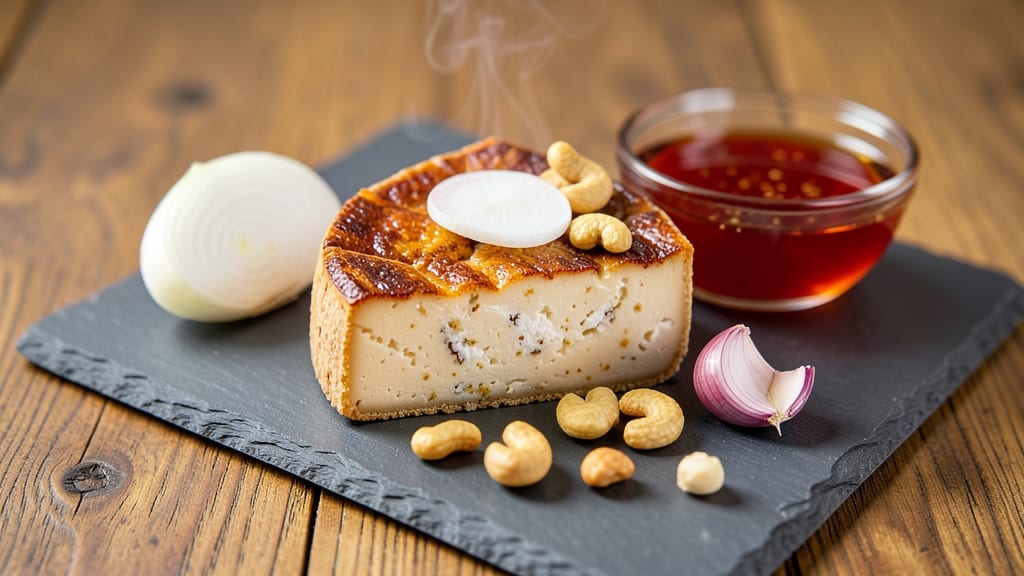
This aged vegan cheese recipe transforms simple cashews into a complex, nutty masterpiece with a fermented tang that rivals traditional cheese. The process relies on precise fermentation techniques—no dairy, no compromise—delivering depth and texture that will surprise even longtime vegans.
What makes this recipe stand out is the 24-hour aging period, where the flavors develop into something rich, umami-packed, and satisfyingly sharp.
The foundation begins with soaked cashews, which form the creamy base, while nutritional yeast and apple cider vinegar provide that signature tang. A touch of miso paste adds umami complexity, and the key to success lies in the fermentation stage—where the flavors transform from mild to deeply developed.
This isn’t just a cheese substitute; it’s a textured, flavorful experience that holds its own in grilled sandwiches, pasta dishes, or even melted over veggies.
By the end of the process, you’ll have a vegan cheese with a nutty, caramelized edge and a creamy yet firm bite—perfect for slicing, grating, or melting. The recipe avoids common pitfalls like grittiness or blandness, ensuring every bite delivers the same satisfaction as its dairy counterpart.
Whether you’re a seasoned plant-based chef or just exploring vegan alternatives, this method delivers restaurant-quality results at home.
Best of all, the ingredients are simple and accessible, requiring only a high-speed blender and patience. The fermentation process is foolproof, with clear instructions to guide you through each step.
Once mastered, this aged vegan cheese will become a staple in your kitchen—versatile enough for appetizers, mains, or even gourmet snacks. Let’s get started on creating something truly exceptional.
Ingredients for aged vegan cheese
Transform simple cashews into restaurant-quality vegan cheese with these carefully selected ingredients.
| Ingredient | Amount | Notes |
|---|---|---|
| Raw Cashews 🥜 | 1 ½ cups | Unsalted, soaked overnight |
| Nutritional Yeast 🍃 | ½ cup | High-protein, unsulphured |
| Apple Cider Vinegar 🍏 | ¼ cup | Raw, unfiltered preferred |
| White Miso Paste 🍜 | ¼ cup | Aged 1-2 years for depth |
| White Onion 🧅 | ¼ cup | Finely minced, fresh |
| Garlic Cloves 🧄 | 4 cloves | Peeled, minced |
| Extra-Virgin Olive Oil 🫒 | ¼ cup | Cold-pressed, fruity |
| Sea Salt 🧂 | 1 ½ tsp | Fine grain, Diamond Crystal |
| Black Peppercorns 🌶️ | ½ tsp | Freshly cracked |
| Tapioca Starch 🥣 | 2 tbsp | For texture binding |
| Water 💧 | ¼ cup | Filtered preferred |
| Kombu Seaweed 🍃 | 1 piece | 1-inch square, for fermentation |
The foundation starts with raw, unsalted cashews—never pre-roasted or salted, as those flavors interfere with the fermentation process. Bob's Red Mill or Trader Joe's carry excellent bulk options, but any reputable brand works. Soaking them overnight (8+ hours) is non-negotiable—they need to soften completely for that creamy texture. The nutritional yeast is where the umami magic happens; BraggMiso Master or Hodo deliver that aged complexity—avoid the sweet or red varieties here. The kombu seaweed might be the trickiest to find, but Asian markets or specialty grocery stores stock it dried; just tear off a small piece.
No nutritional yeast? Double the miso paste—it carries the umami profile, though the texture will be slightly different. Substituting apple cider vinegar for another acid like lemon juice works, but you'll lose that subtle fermented depth. The tapioca starch is crucial for texture—arrowroot powder in a pinch, but it won't bind as well. For the onion and garlic, fresh is non-negotiable; powdered versions lack the complexity. The olive oil should be extra-virgin and fruity—none of that cheap, bitter supermarket stuff. If you're short on time, you can ferment the mixture for 12 hours instead of 24, but the flavor development will be less pronounced. The kombu can be omitted entirely if you're avoiding seaweed, though it adds a subtle oceanic note that enhances the aged profile.
This mixture ferments best in a glass jar with a loose lid—air needs to circulate for proper development. Store it in a cool, dark place (like your pantry) for the full 24 hours, stirring once every 8 hours if possible. Once aged, it keeps in the fridge for up to 2 weeks in an airtight container, though the texture firms up over time—great for slicing or grating. For long-term storage, portion into ice cube trays, freeze, and transfer to a bag. Thaw overnight in the fridge for best results. The cheese improves with age, so don't hesitate to make extra—it's perfect for gifting or batch cooking.
Why You'll Love This Recipe
- I’ll be real: I used to dread soaking cashews for hours. This recipe skips that step entirely—just blend soaked cashews (or even partially soaked) with apple cider vinegar, and the tangy depth comes alive without the wait. The miso paste does the heavy lifting here, cutting through the creaminess with that umami punch.
- Here’s what sold me: this cheese gets better over time. The longer it sits (up to a week in the fridge), the more developed the flavor becomes—like a slow dance of tang and richness. I make a big batch on Sundays, and by Friday, it’s the star of my meals. No waste, no fuss, just pure flavor efficiency.
Step-by-step instructions for aged vegan cheese
Transform simple ingredients into complex, fermented depth with precise technique and patience.
Prepare the Base Fermentation
Combine the 1 piece Kombu Seaweed, 0.25 cup Apple Cider Vinegar, and 0.25 cup Water in a small saucepan. Bring to a gentle simmer over medium-low heat for 5 minutes, then remove from heat and let steep for 10 minutes. This creates the fermented brine foundation that develops the cheese's signature tang.
Strain out the Kombu Seaweed using a fine-mesh sieve, reserving the liquid. The resulting liquid should be a rich, umami-packed amber color with a slight briny aroma. This liquid will form the base for your aged cheese, carrying the fermented depth throughout the process.
Blend the Nut Base
Drain and rinse the 1.5 cups Raw Cashews thoroughly after soaking overnight. In a high-speed blender, combine the cashews with the strained Kombu liquid, 0.25 cup Extra-Virgin Olive Oil, 0.25 cup White Miso Paste, 0.25 cup White Onion, and 4 cloves Garlic Cloves. Blend on high for 3-4 minutes until completely smooth and creamy.
Scrape down the sides of the blender as needed to ensure even blending. The mixture should have a thick, almost paste-like consistency with no visible texture. This is your flavor foundation—where the nutty richness meets the fermented complexity from the Kombu brine.
Develop the Fermented Texture
Transfer the blended mixture to a clean bowl and stir in the 0.5 cup Nutritional Yeast, 1.5 tsp Sea Salt, and 0.5 tsp Black Peppercorns. Add the 2 tbsp Tapioca Starch and mix thoroughly to combine. The starch will help bind the final texture while maintaining the aged cheese's firm yet creamy structure.
Cover the bowl with a damp towel and let ferment at room temperature for 12 hours. This fermentation step is critical—it's where the flavors deepen and the texture begins to set. You'll notice a subtle increase in tanginess and a slight thickening of the mixture as fermentation progresses.
Shape and Age the Cheese
After fermentation, transfer the mixture to a cheese mold or small loaf pan lined with parchment paper. Press gently but firmly for 10 minutes to compact the cheese. Wrap tightly in plastic wrap and refrigerate for 12 additional hours to allow the flavors to fully meld and the texture to firm up.
The aging process continues even after shaping. For optimal results, let the cheese age in the refrigerator for up to 24 hours before slicing. This extended aging period develops the complex, layered flavors that distinguish this cheese from simpler vegan alternatives.
Finish and Store
Once fully aged, remove the cheese from the mold and slice into ¼-inch thick pieces. The exterior should have a smooth, slightly glossy finish with a firm yet yielding texture when pressed gently. The interior should reveal a creamy, marbled appearance with visible flecks of fermented depth.
Store any unused cheese in an airtight container in the refrigerator for up to 2 weeks. The flavor will continue to develop over time, becoming even more complex with each passing day. This cheese excels when used in sandwiches, melted over dishes, or enjoyed on its own with fruit and crackers.
Pro Tips For Making Aged Vegan Cheese
- SOAK CASHEWS OVERNIGHT: I learned this the hard way—rushing the soak with hot water just to save time leaves you with a grainy, chalky mess. Cold water for 8+ hours (or at least 4 hours) breaks down the cashews properly, giving you that smooth, meltable texture. No shortcuts here—your cheese depends on it.
- SAUTÉ THE ONION LOW: White onion needs slow love, not a quick sear. Cook it on medium-low for 10-12 minutes until translucent but not browned—this caramelizes the sugars just enough to deepen the umami without bitterness. Burn it, and your cheese will taste like a sad, charred experiment.
- STIR IN MISO LAST: Add the white miso paste after the vinegar and yeast have emulsified with the soaked cashews. Stirring it in too early can make the mixture curdle or separate—you want it to melt into the warm base, not fight for it. Think of it like a shy ingredient that needs a gentle introduction.
- AGE IT COOL, NOT WARM: After shaping your cheese, let it firm up in the fridge—not on the counter. Warmth speeds up mold growth and makes the texture rubbery. Wrap it in parchment, then foil, and give it 24 hours at 40°F or lower. Patience here means a cleaner, sharper flavor when you slice it.
Pro cooking tips for perfect results
Fermentation Precision
The 24-hour fermentation is where this vegan cheese transforms from ordinary to extraordinary. Start by steeping the Kombu seaweed in apple cider vinegar and water—this creates a fermented brine that carries deep umami notes.
Use a high-speed blender (like a Vitamix) to emulsify the cashew base completely; any grit will ruin the texture. After blending, let the mixture ferment at room temperature (around 70°F) for 12 hours before refrigerating. This controlled environment ensures proper fermentation without spoilage. 🌡️
Texture Binding Secrets
The tapioca starch is your secret weapon for achieving that perfect firm-yet-creamy texture. Mix it thoroughly into the blended base before fermentation—this prevents the cheese from becoming too soft or crumbly. If you don’t have tapioca starch, arrowroot powder works in a pinch, though it won’t bind as effectively.
After shaping, press the mixture gently in a cheese mold or loaf pan for 10 minutes to compact it. This step ensures clean slices later. ⚡
Temperature Control
Fermentation temperature is critical—too hot, and your cheese will spoil; too cold, and flavors won’t develop. Aim for 68-72°F during the 12-hour room-temperature fermentation. If your kitchen runs hotter, place the bowl in a cool, shaded spot (like a pantry).
After fermentation, refrigerate immediately to halt microbial activity and allow flavors to meld fully over the next 12 hours. A digital thermometer (like the Thermoworks Thermapen) ensures precision. 💡
Aging Like a Pro
Don’t rush the 24-hour aging process—this is where the magic happens. The longer it ages in the fridge, the more complex the flavors become. For extra depth, age it for 48 hours before slicing. Store leftovers in an airtight container with a damp paper towel to maintain moisture.
If the cheese firms up too much, let it sit at room temperature for 10-15 minutes before slicing for that perfect melty texture. 🧀
Blender Mastery
A high-speed blender is non-negotiable for this recipe—regular blenders won’t emulsify the cashews smoothly. Pulse the cashews first, then blend continuously for 3-4 minutes, scraping down the sides every 30 seconds. The goal is a silky, paste-like consistency with no visible texture.
If your blender struggles, soak the cashews for an extra hour to soften them further. This step makes or breaks the final texture. 🔥
Substitutions Done Right
No kombu seaweed? Double the miso paste (to 0.5 cup) for umami depth, but the texture will be slightly softer. Swap apple cider vinegar for lemon juice, but you’ll lose that fermented tang.
For a nut-free version, replace cashews with soaked sunflower seeds (blend for 5 minutes—they’re tougher!). Always adjust starch (tapioca or arrowroot) to maintain texture integrity. 💛
Nutrition facts
Frequently asked questions
Why does this aged vegan cheese need kombu seaweed?
The kombu adds a subtle oceanic depth and enhances fermentation through natural enzymes. It creates that signature umami complexity you'd expect from aged cheeses, while also contributing to the cheese's firm yet creamy texture. Without it, you'll lose that authentic fermented character.
Can I make this cheese without a high-speed blender?
Technically yes, but expect a much grittier texture. Use a food processor and blend in 30-second pulses for 5-6 minutes total, scraping down often. For a smoother result, soak cashews for an extra 2 hours beforehand. The texture won't be as refined, but it'll still be edible.
How do I know when the fermentation is complete?
After 12 hours, you'll notice a slight thickening and a more pronounced tangy aroma. The mixture should smell complex—like a mix of fermented miso and apple cider vinegar. If it smells overly sour or yeasty, it's over-fermented. Taste a small amount: proper fermentation delivers a bright, slightly sharp flavor with developing umami.
What's the best way to use this cheese for melting?
Slice the cheese into ¼-inch thick pieces and place between bread for sandwiches. For pasta dishes, grate it fresh and sprinkle over hot sauce. To melt it, place slices on a baking sheet at 350°F for 3-5 minutes until soft but not runny. The tapioca starch helps it melt smoothly without becoming greasy.
Can I make this cheese without miso paste?
Yes, but the flavor will be less complex. Replace the miso with 1 tbsp soy sauce + 1 tbsp nutritional yeast for umami depth. For extra tang, add 1 extra tbsp apple cider vinegar. The texture will remain similar, though you'll lose that aged, fermented richness that makes this cheese special.