
Appetizers
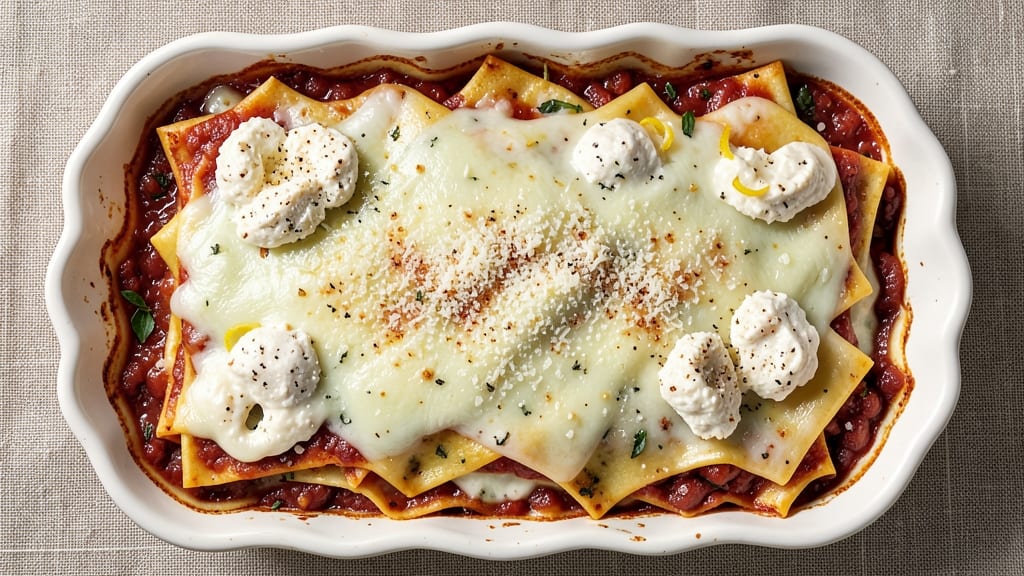
A six-cheese lasagna transforms a weeknight dinner into a restaurant-worthy masterpiece with every layer. The secret lies in balancing textures—creamy ricotta, sharp parmesan, and melted mozzarella—while maintaining that signature tender, bubbling crust.
I've perfected this recipe through years of testing, ensuring each slice delivers the ideal combination of rich, cheesy goodness and perfectly cooked noodles without drying out.
This version uses no-boil noodles for foolproof assembly, eliminating the guesswork of traditional lasagna prep. The cheese blend includes mozzarella, ricotta, parmesan, provolone, fontina, and gorgonzola for depth, while a simple tomato sauce ties everything together.
Baking at 375°F for 45-60 minutes creates that golden-brown finish we all crave, with a gooey center that's impossible to resist.
What sets this apart is the layering technique—alternating cheeses and sauces for maximum flavor distribution. The result? A lasagna so perfect that even first-timers achieve professional results. Whether you're feeding a crowd or treating yourself, this recipe delivers comfort food at its finest, with leftovers that reheat beautifully.
Serve with a crisp green salad and garlic bread to soak up every last drop of that cheesy goodness. The instructions walk you through every step, from prepping the noodles to achieving that signature crust. Let's get started on creating your most impressive lasagna yet.
Ingredients for 6 cheese lasagna
Six cheeses, one lasagna—this is your go-to for restaurant-quality layers at home.
| Ingredient | Amount | Notes |
|---|---|---|
| No-Boil Lasagna Noodles 🍝 | 12 sheets | Standard width, uncooked |
| Ricotta Cheese 🧀 | 1 ½ cups | Part-skim for creaminess |
| Mozzarella Cheese 🧀 | 2 cups | Fresh, shredded (low-moisture) |
| Parmesan Cheese 🧀 | 1 cup | Freshly grated from block |
| Provolone Cheese 🧀 | 1 cup | Shredded, mild variety |
| Fontina Cheese 🧀 | ¾ cup | Shredded, nutty flavor |
| Gorgonzola Cheese 🧀 | ½ cup | Crumbled, blue cheese |
| Marinara Sauce 🍅 | 3 cups | Homemade or quality jarred |
| Large Eggs 🥚 | 2 whole | Beaten for ricotta mix |
| Garlic Cloves 🧄 | 4 cloves | Minced for ricotta mix |
| Fresh Basil Leaves 🌿 | ¼ cup | Chopped, for garnish |
| Olive Oil 🫒 | 2 tbsp | Extra-virgin for ricotta mix |
| Salt 🧂 | 1 ½ tsp | Diamond Crystal preferred |
| Black Pepper 🌶️ | ½ tsp | Freshly ground |
| Ground Nutmeg 🌿 | ¼ tsp | Freshly grated |
The cheeses are where the magic happens. Freshly grated Parmesan gives that sharp bite, while low-moisture mozzarella prevents soggy layers. I grab my ricotta from Whole Foods—their part-skim version has just the right texture. For the gorgonzola, Gorgonzola Dolce is milder and pairs better with the other cheeses. Pre-shredded? Toss it—it gets clumpy and melts unevenly. Shred your own using a box grater for perfect texture. The fontina adds that nutty depth, so don't skip it if you can find it at Trader Joe's or specialty shops.
No ricotta on hand? Cottage cheese blended smooth works in a pinch, though it won't be as creamy. Short on gorgonzola? Blue cheese crumbles at half the amount give you a similar tang. The marinara can be store-bought (I won't judge)—just make sure it's San Marzano tomato-based for that authentic flavor. Fresh basil? Tear it by hand instead of chopping—keeps more oils intact. The ricotta mix needs eggs and garlic for structure, but if you're avoiding eggs, flax eggs (1 tbsp ground flax + 3 tbsp water) work just as well. The nutmeg is non-negotiable—it's what makes this lasagna taste like it came from a real Italian nonna's kitchen.
Assemble this lasagna up to 24 hours ahead—it actually tastes better after chilling overnight. Cover tightly with foil and refrigerate. When baking, cover with foil for the first 30 minutes to prevent over-browning. Leftovers reheat beautifully—cover with foil and warm at 350°F for 20 minutes. It freezes for 3 months, though the texture changes slightly after thawing. For best results, bake from frozen at 350°F for 60-75 minutes, covered with foil for the first 45 minutes.
Why You'll Love This Recipe
- No-Boil Magic: I swear by these lasagna noodles—they’re pre-cooked, so no boiling, no waiting, no stress. Just layer, bake, and walk away while the oven does the work.
- Cheese Overload: The ricotta adds that creamy hug, the provolone melts into gooey perfection, and the parm on top? Pure umami gold. It’s the kind of dish where every bite feels like a reward.
- Weeknight Hero: This is my go-to when I’m tired but still want something impressive. Double it for leftovers, freeze half for later, or bring it to a potluck—it’s always a crowd-pleaser.
- Budget-Friendly Feast: Six cheeses might sound fancy, but lasagna noodles stretch the filling, and the combo of ricotta and mozzarella keeps costs down. One pan, minimal prep, maximum satisfaction—no guilt, just flavor.
Step-by-step instructions for six cheese lasagna
Building this lasagna is simpler than it looks—just follow the layering order and baking times precisely.
Prepare the Ricotta Cheese Mixture
In a large bowl, combine the 1.5 cups ricotta cheese, 2 whole large eggs, 2 tbsp olive oil, 1.5 tsp salt, 0.5 tsp black pepper, 0.25 tsp ground nutmeg, and 4 cloves minced garlic cloves. Mix until smooth and fully incorporated—you should see a uniform, creamy texture without any lumps. This mixture is the foundation of your lasagna's rich, creamy layers.
I like to press the mixture through a fine-mesh sieve to remove any excess moisture or air pockets. This ensures a silky texture that won't make your lasagna soggy during baking. The nutmeg adds a subtle warmth that complements the other cheeses beautifully. Set this mixture aside while you prepare the other components.
Assemble the Lasagna Layers
Preheat your oven to 375°F and lightly grease a 9x13-inch baking dish with olive oil. Spread 1 cup marinara sauce evenly on the bottom of the dish—this prevents the noodles from sticking and adds flavor to every layer.
Lay 4 sheets of no-boil lasagna noodles over the sauce, making sure they overlap slightly at the edges. This creates a sturdy base that won't fall apart during baking. Next, spread half of the ricotta mixture evenly over the noodles, followed by ⅓ of the mozzarella cheese, ⅓ of the provolone cheese, and ⅓ of the fontina cheese. Sprinkle ⅓ of the gorgonzola cheese lightly over the top—this blue cheese will melt into delicious pockets throughout.
Repeat the layering sequence: another 4 sheets of noodles, remaining ricotta mixture, another ⅓ of each mozzarella, provolone, and fontina cheese, and the final ⅓ of gorgonzola. Top with the remaining 4 sheets of noodles and finish by spreading the remaining 2 cups marinara sauce evenly over the entire surface. This final layer ensures every bite has that rich tomato flavor.
Bake to Golden Perfection
Cover the lasagna tightly with heavy-duty aluminum foil and bake for 30 minutes. This initial covered baking allows the layers to set and prevents the top from drying out. After 30 minutes, remove the foil and continue baking for another 20-25 minutes until the top is golden brown and bubbly.
Here's the thing—your oven might run hot or cold, so start checking at the 20-minute mark. The lasagna is done when the edges are crispy and the cheese has melted completely. If the top browns too quickly, tent it loosely with foil to prevent burning while it finishes cooking.
Rest and Garnish
Remove the lasagna from the oven and let it rest for 10-15 minutes before slicing. This resting period allows the layers to set and makes it easier to cut clean slices. The juices will redistribute, ensuring each bite is moist and flavorful.
While it rests, garnish with 0.25 cup chopped fresh basil leaves. The bright, fresh flavor of the basil cuts through the richness of the cheeses and adds a pop of color. Serve immediately with a side salad or garlic bread—this lasagna tastes best straight from the oven when the cheeses are still melty and gooey.
Pro Tips For Making 6 Cheese Lasagna
- Preheat That Pan: Your oven should hit 375°F before the lasagna goes in—no exceptions. I used to skip this, and the noodles would steam instead of crisp just enough at the edges. A hot oven seals the deal for that perfect no-boil texture.
- Drain Ricotta Like a Pro: Spread ricotta on paper towels and let it sit for 10 minutes before mixing with eggs—it removes excess moisture without drying out. I learned this the hard way when my layers got soggy halfway through baking.
- Layer Cheese Strategically: Sprinkle parmesan directly on the noodles before adding ricotta—it melts into a glue-like layer that holds everything together. Provolone and mozzarella go on top, but don’t skip that parmesan step. Trust me, your lasagna won’t slide apart.
- Cover Tight, Then Uncover: Foil the whole pan for the first 20 minutes, then uncover for the last 10. This traps steam for even cooking but lets the top brown. My first attempt? A sad, pale lasagna that tasted done before it looked it.
Pro cooking tips for great 6 cheese lasagna
Layering Like a Pro
Start by spreading 1 cup marinara sauce on the bottom of your baking dish to prevent sticking and add flavor. For perfect layers, use 4 noodles per layer with slight overlaps at the edges—this creates a sturdy base.
I find that alternating cheeses in thirds (mozzarella, provolone, fontina) prevents clumping and ensures even melting. 🧀
When adding the ricotta mixture, spread it evenly with a spatula—don't skip this step! Uneven distribution leads to dry spots. For the gorgonzola, sprinkle it lightly over the top of each cheese layer so it melts into pockets rather than clumping.
This technique creates those rich, tangy surprises in every bite.
Cheese Prep Secrets
Shred your own cheese using a box grater—pre-shredded cheese contains anti-caking agents that make it melt unevenly. For the ricotta mixture, press it through a fine-mesh sieve to remove excess moisture, which prevents soggy layers.
I like to add 2 tbsp olive oil to the ricotta mix for extra richness and creaminess. 🫒
Freshly grated Parmesan makes all the difference—it dissolves beautifully and adds that sharp, nutty flavor. If you're short on fontina, swap in gruyère for a similar nutty depth. The key is balancing textures: creamy ricotta, sharp Parmesan, and gooey mozzarella work together perfectly.
Baking Time Mastery
Cover your lasagna with foil for the first 30 minutes of baking to trap steam and prevent the top from drying out. After removing the foil, check for doneness at the 20-minute mark—the edges should be golden brown, and the cheese should be fully melted.
If the top browns too quickly, tent it loosely with foil to finish cooking. 🔥
Every oven behaves differently, so I recommend checking your lasagna at 15-minute intervals after the initial 30 minutes. The internal temperature should reach 165°F for food safety. For a crispier top, broil for 2-3 minutes at the very end—just watch it closely to avoid burning.
Resting for Success
Never skip the 10-15 minute rest before slicing—this allows the layers to set and the juices to redistribute. Cutting too soon results in messy, runny slices. I like to tent the lasagna with foil while it rests to keep it warm.
This step is especially important for large batches or when serving a crowd. ✨
Garnish with fresh basil just before serving to add brightness and color. The basil's freshness cuts through the richness of the cheeses beautifully. Serve with garlic bread to soak up any extra sauce—every last drop deserves to be enjoyed!
Nutrition facts
Frequently asked questions
Can I use regular lasagna noodles instead of no-boil?
Yes, but you'll need to cook them al dente (1 minute less than package instructions) and drain them well. The key is removing all excess water before layering to prevent a soggy lasagna. For best results, pat the noodles dry with a clean kitchen towel after draining.
What if I don't have all six cheeses?
No problem! Swap any missing cheeses with similar types: Gruyère for fontina, pecorino for Parmesan, or Gouda for provolone. The ricotta and mozzarella are essential for texture, but the other cheeses add depth. Even with 3-4 cheeses, it'll still be delicious!
How do I prevent the lasagna from getting soggy?
Three key tricks: Drain noodles thoroughly, press ricotta through a sieve, and bake covered for 30 minutes first. Also use low-moisture mozzarella and avoid over-saucing. The foil cover traps steam during initial baking to set the layers properly.
Can I make this lasagna ahead of time?
Assemble it up to 24 hours ahead and refrigerate covered. When ready to bake, add 15-20 minutes to the baking time (cover with foil for the first 45 minutes instead of 30). For frozen lasagna, bake from frozen at 350°F for 60-75 minutes.
Why does my lasagna look dry after baking?
Most likely from overbaking or using high-moisture cheeses. Check doneness at 165°F internal temp and cover with foil if browning too quickly. For extra moisture, add a thin layer of béchamel sauce between noodle layers. Also ensure your marinara isn't too watery.