
Appetizers
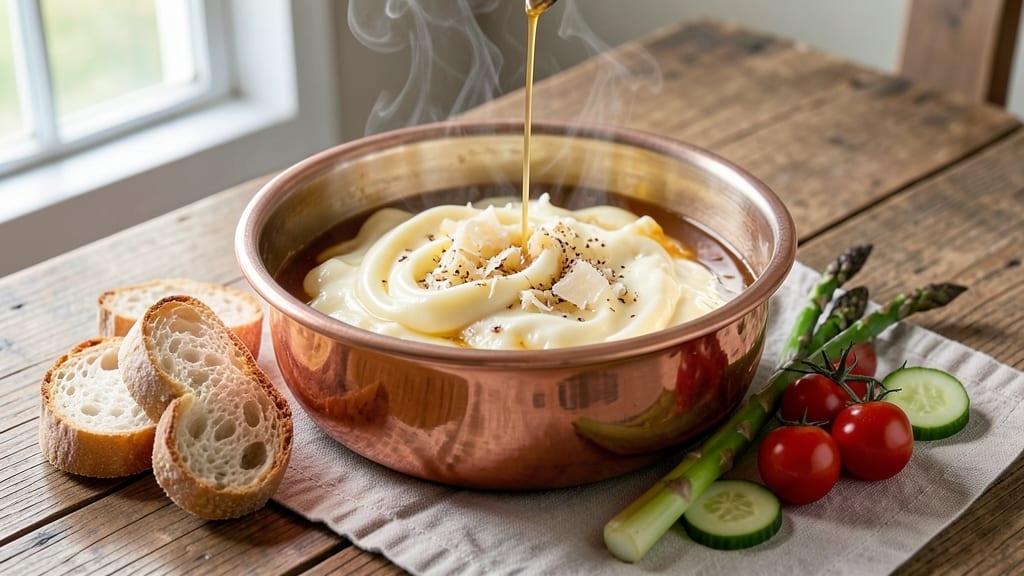
This 5-star cheese fondue recipe transforms a simple pot into a luxurious centerpiece that rivals your favorite restaurant—velvety, rich, and perfectly balanced with every dip. The secret lies in the right cheese blend, slow melting, and maintaining that ideal 125°F temperature for silky smoothness.
I’ve perfected this version over countless gatherings, where it never fails to impress even the most discerning guests.
The foundation starts with a classic mix of Gruyère, Emmental, and Comté, melted with white wine and a touch of garlic broth for depth. What sets this apart is the crispy bread bites—toasted to golden perfection and served alongside—adding a satisfying contrast to the creamy fondue.
The technique ensures no graininess or separation, just a luxurious, stretchy melt that coats every bite.
By the time you’re done, you’ll have a fondue so smooth it feels like velvet, with a subtle tang from the wine and garlic that keeps it from being too heavy.
The crispy bread bites add a delightful crunch, while optional dippers like apples, pears, or even grilled meats elevate it to restaurant-quality. This isn’t just fondue—it’s an experience that turns a simple appetizer into a showstopper.
Ready in just 30 minutes and designed for foolproof results, this recipe scales effortlessly for parties or cozy nights in. The key is patience—letting the cheeses melt slowly over a double boiler ensures no lumps, while the garlic broth adds that extra layer of sophistication.
Serve with your favorite dippers and watch it disappear in minutes.
Ingredients for 5 star cheese fondue
Six cheeses, one velvety melt—this luxurious fondue blend transforms simple ingredients into restaurant-worthy indulgence.
| Ingredient | Amount | Notes |
|---|---|---|
| Gruyère Cheese 🧀 | 2 cups | Freshly grated, aged 12+ months |
| Emmental Cheese 🧀 | 1 ½ cups | Freshly grated, nutty flavor |
| Comté Cheese 🧀 | 1 cup | Freshly grated, fruity notes |
| Dry White Wine 🍷 | 1 cup | Sauvignon Blanc preferred |
| Garlic Cloves 🧄 | 3 cloves | Minced for garlic broth |
| Vegetable Broth 💧 | ½ cup | Low-sodium preferred |
| Cornstarch 🌾 | 1 tbsp | For thickening fondue |
| White Wine Vinegar 🍶 | 1 tsp | Balances richness |
| Kirsch or Brandy 🍷 | 1 tbsp | Optional for depth |
| Baguette 🍞 | 1 whole | Crust removed, cubed |
| Unsalted Butter 🧈 | 2 tbsp | For bread toasting |
| Paprika 🌶️ | ½ tsp | Smoked for garnish |
| Fresh Thyme Leaves 🌿 | ¼ cup | For garnish |
| Nutmeg 🌶️ | ¼ tsp | Freshly grated |
The cheese trio makes all the difference—Gruyère for nutty depth, Emmental for meltability, and Comté for fruity complexity. Whole Foods or specialty cheese shops carry the best aged varieties, but don’t stress if you can’t find Comté—extra Gruyère works in a pinch. Freshly grating ensures no graininess, so skip the pre-grated stuff (it’s a fondue dealbreaker). The wine should be dry—Sauvignon Blanc has enough acidity to cut through the richness, while Chardonnay leans too buttery.
No white wine? Dry vermouth or apple juice works in a bind, though the flavor won’t be identical. The garlic broth is non-negotiable for depth—low-sodium vegetable broth keeps it from overpowering. For the bread bites, baguette is ideal, but a sturdy sourdough holds up beautifully too. Toast them until golden—butter and paprika add that restaurant-quality crunch. Pro tip: Keep the fondue pot at 125°F using a thermometer; any hotter and it separates, any cooler and it thickens.
Fondue reheats beautifully—just add a splash of warm water or wine to restore smoothness. Store leftovers in an airtight container for 3 days, but honestly, it disappears faster than that. The bread bites? Toast them fresh before serving—they lose crispiness fast. For parties, double the batch and use two fondue pots to avoid crowding. Garnish with fresh thyme and nutmeg right before serving—it’s that final touch that makes it feel special.
Why You'll Love This Recipe
- No Fuss Setup: I swear by this—just shred the cheeses, pour the wine, and let the fondue pot do the work. No fancy gadgets, no stressing over precise temperatures. That first bubble? That’s your cue.
- Triple Cheese Magic: Gruyère’s nutty depth, Emmental’s melt-in-your-mouth silk, and Comté’s caramelized crunch—toss in a splash of white wine and roasted garlic, and you’ve got a sauce that’s dangerously good. The kind that makes guests ask for the recipe mid-dip.
- Weeknight or Party Star: Same recipe, zero adjustments. Serve it with crusty bread for a lazy Tuesday or pile on charcuterie for a dinner party. Honestly, I’ve used it for both—no shame in a shortcut that still feels special.
- Leftovers? Yes, Please: The fondue pot keeps perfectly for days, and the cheese sauce reheats like a dream. Spread it on toast the next morning or turn it into a gratin—because why waste something this good? (Between us, I’ve done both.)
Step-by-step instructions for velvety cheese fondue
This method delivers a perfectly balanced fondue with a silky texture and rich, complex flavor.
Prepare the Garlic Broth Base
In a small saucepan, combine the 1 cup dry white wine, 3 cloves minced garlic cloves, and 0.5 cup vegetable broth. Bring to a gentle simmer over medium heat and cook for 5 minutes until the garlic is fragrant and the liquid reduces slightly by about 2 tablespoons. This aromatic base forms the foundation of your fondue, infusing the cheese with depth and preventing bitterness.
Strain the mixture through a fine-mesh sieve into a clean saucepan, pressing gently on the garlic to extract all the flavor. Discard the solids. Here's where it gets important: if your wine tastes particularly harsh, add 1 teaspoon white wine vinegar now to balance the acidity. The broth should smell rich and inviting—like a warm hug for your taste buds.
Melt and Whisk the Cheese Mixture
Place a medium-sized fondue pot (or heavy saucepan) over low heat and add the 2 cups Gruyère Cheese, 1.5 cups Emmental Cheese, and 1 cup Comté Cheese. Let the cheeses begin to melt slowly, stirring gently with a wooden spoon to help break them down. This process should take about 3-4 minutes—don't rush it.
Once the cheeses start to soften and become creamy, gradually whisk in the garlic broth you prepared earlier. The heat should remain low—if it gets too hot, the cheese will seize or develop a grainy texture. You'll know you're on the right track when the mixture becomes smooth and glossy, like melted velvet. This is where the magic happens: the different cheeses blend together, creating a harmonious flavor profile that's greater than the sum of its parts.
Thicken and Finish the Fondue
In a small bowl, whisk together 1 tablespoon cornstarch with 2 tablespoons cold water until smooth. Slowly drizzle this mixture into the fondue pot while whisking constantly. The fondue should begin to thicken immediately—you're looking for a consistency that coats the back of a spoon but still flows smoothly when stirred. If it's too thick, add 1 tablespoon hot water at a time until you reach the perfect pouring consistency.
Remove the pot from heat and stir in 1 tablespoon Kirsch or brandy (if using) and 0.25 teaspoon freshly grated nutmeg. The brandy adds a subtle depth that elevates the dish, while the nutmeg provides a warm, aromatic finish. Taste and adjust seasoning with salt if needed—though with these high-quality cheeses, you likely won't need much. Let the fondue rest for 5 minutes off the heat to allow the flavors to meld completely.
Prepare the Crispy Bread Bites
While the fondue rests, cut the 1 whole baguette into 1-inch cubes, removing the crust as specified. In a large skillet, melt 2 tablespoons unsalted butter over medium heat. Add the bread cubes in a single layer and toast for 3-4 minutes, turning occasionally, until they're golden brown and crispy on all sides. The key here is patience—rushing will result in soggy bread that won't hold up to the fondue.
Transfer the toasted bread to a paper towel-lined plate to drain any excess butter. Just before serving, sprinkle the bread bites with a mixture of 0.5 teaspoon smoked paprika and 0.25 cup fresh thyme leaves. This final garnish adds a beautiful contrast in color and texture, with the paprika giving a subtle smokiness that pairs perfectly with the rich cheese.
Serve with Style and Precision
Return the fondue to low heat just before serving to keep it warm and fluid. Use two forks—one for dipping and one for serving the bread. The ideal fondue should be smooth as silk, with a temperature that's hot enough to melt the cheese completely but not so hot it burns your guests. Serve immediately with the crispy bread bites and additional garnishes on the side for customization.
Here's the secret to success: maintain the fondue at 160-170°F throughout the meal. If it thickens too much, whisk in 1 tablespoon hot water to restore the perfect consistency. Each bite should deliver a perfect balance of creamy cheese, crispy bread, and aromatic herbs—this is what transforms a simple fondue into a five-star experience that will have your guests begging for seconds.
Pro Tips For Making 5 Star Cheese Fondue
- GRATE FRESH, NOT PRE-GRATED: I learned this the hard way—pre-grated cheese has anti-caking agents that make fondue grainy and watery. Use a box grater (or food processor) for Gruyère, Emmental, and Comté, and do it right before melting. The texture difference is night and day, and your fondue won’t seize up like a stubborn old door.
- LOW AND SLOW, NOT BOILING: Start your fondue pot on medium-low heat—high heat turns wine into vinegar and burns the garlic before the cheese even melts. Once the cheese is fully incorporated, drop the heat to the lowest setting and keep it there. A gentle simmer is all you need; rushing it ruins the balance of flavors.
- SKIP THE STARCHY ADD-INS: Cornstarch or flour thickens fondue, but it also dulls the sharpness of Gruyère and Comté. Instead, let the cheese’s natural fat melt into the wine—it’ll thicken on its own. If it gets too thin, a splash of cold white wine (not milk) fixes it without killing the flavor.
- PEEL AND SMASH THE GARLIC: Whole garlic cloves burn and leave bitter pockets in fondue. Peel them, smash them flat with the side of your knife, and scatter the pieces into the pot. This infuses the cheese with garlic flavor without turning it into a garlic soup—just subtle, aromatic richness.
Regional styles of these flavors
Swiss Alpine Tradition
The classic Swiss fondue we know today originated in the Alpine regions of Switzerland, where it was traditionally made with just Gruyère and Emmental melted over a pot of boiling wine. In the Valais region, they add a splash of Kirsch (cherry brandy) for depth, while in Zurich, a pinch of white pepper is common. The Swiss serve it with crusty bread and pickles—the tangy dill pickles cut through the richness beautifully. I always
French Burgundy Elegance
Across the border in Burgundy, France, fondue takes on a more refined character, often incorporating Beaujolais wine and a touch of mustard for a subtle kick. The French version leans into Comté and Morbier cheeses, which add a fruity complexity. They also serve it with charcuterie, like saucisson sec or jambon de Bayonne, alongside the bread. For a French-inspired twist, I swap the Sauvignon Blanc for a light Pinot Noir (yes, it works!) and add a pinch of Dijon mustard to the cheese blend. 🍷
American Comfort Twist
In the U.S., fondue has evolved into a cozy, crowd-pleasing dish, often served at winter gatherings or holiday parties. Many American recipes include sharp cheddar or Gouda for a bolder flavor, and they’re not afraid to add a splash of beer (like Heineken) for a casual vibe.
I’ve seen fondue paired with grilled chicken skewers, roasted potatoes, and even fruits like pineapple or apples for a sweet-savory contrast. For a true American touch, I sometimes add a dash of hot sauce to the fondue for those who love a little heat. 🌶️
Japanese Fusion Innovation
In Tokyo and Osaka, fondue has been reimagined with a Japanese flair, incorporating umami-rich ingredients like miso paste or dashi broth into the cheese base. Some modern restaurants serve it with tempura-vegetable dippers or even soft-boiled eggs for dipping.
For a fusion twist, I’ve experimented with adding a teaspoon of miso paste to the garlic broth and serving it with crispy panko bread bites. The result? A cheesy, savory, umami-packed fondue that’s unlike anything traditional. 🍜
Italian Rustic Approach
Southern Italy brings its own rustic charm to fondue, often using Parmigiano-Reggiano and Pecorino Romano instead of Swiss cheeses. The Italians melt the cheese over a pot of red wine (yes, red!) and add a splash of olive oil for richness.
They serve it with grilled breadsticks, cherry tomatoes, and fresh basil. For an Italian-inspired version, I replace the white wine with a Chianti and add a drizzle of extra virgin olive oil to the melted cheese.
The result is a bold, hearty fondue that’s perfect for a cozy dinner. 🍅
Nutrition facts
Frequently asked questions
What's the secret to getting perfectly smooth fondue without lumps?
Slow melting over low heat is key—never rush it! Use freshly grated cheese (pre-grated has anti-caking agents that cause graininess) and whisk constantly as it melts. The cornstarch slurry helps bind the mixture, while maintaining 125°F temperature prevents separation. If lumps appear, strain through a fine-mesh sieve for instant smoothness.
Can I make this fondue ahead of time?
Yes! Prepare the cheese mixture up to 24 hours ahead and refrigerate in an airtight container. When ready to serve, reheat gently over a double boiler, whisking in 1 tablespoon warm water at a time until smooth. For the bread bites, toast them fresh before serving—they lose crispiness when reheated. The fondue reheats beautifully but loses some of its velvety texture if kept too long.
What are the best dippers besides bread?
For a 5-star experience, try crispy potato chips, apple slices, pears, or even grilled chicken skewers. Vegetables like bell peppers, broccoli florets, or carrot sticks add freshness, while pretzel rods or baguette slices keep the classic vibe. Pro tip: Serve dippers at room temperature for the best texture contrast.
Why did my fondue turn grainy?
Graininess usually happens from overheating, using pre-grated cheese, or adding cold liquids too quickly. Always melt cheese over low heat and whisk constantly. If it happens, strain through a fine-mesh sieve and whisk in 1 teaspoon lemon juice to help emulsify. For prevention, use a mix of Gruyère and Emmental—they melt more smoothly than single cheeses.
How do I keep the fondue at the right temperature?
Use a fondue burner or keep the pot over very low heat with a thermometer handy. The ideal temperature is 160-170°F—any hotter and it separates, any cooler and it thickens. For parties, preheat the fondue pot on the burner for 10 minutes before adding cheese. If it thickens, whisk in 1 tablespoon warm water to restore smoothness.