
Main Courses
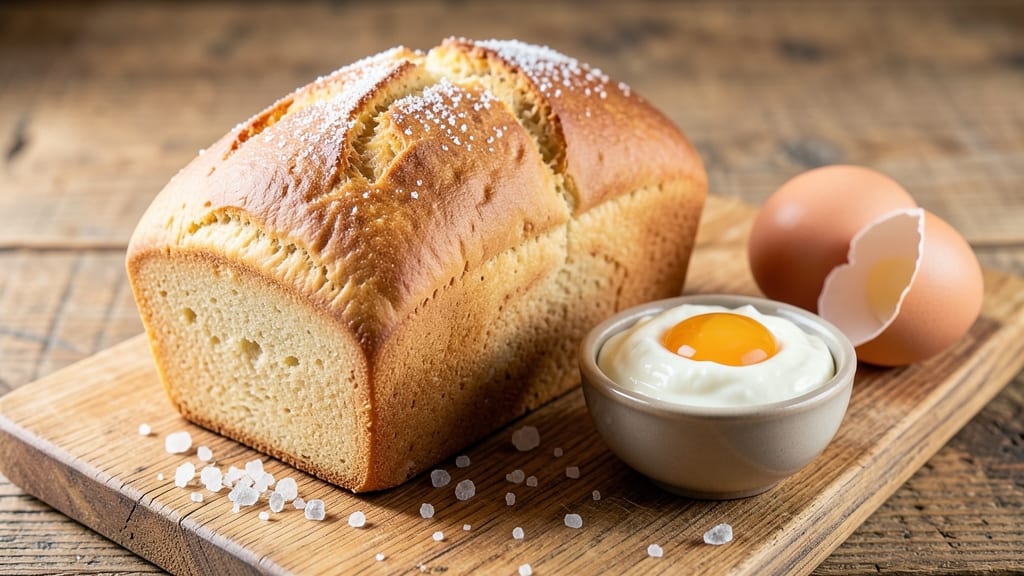
This 5-ingredient cottage cheese bread delivers a surprisingly light, airy loaf that's as healthy as it is delicious—no gluten, no fuss, just pure satisfaction. 💛 The secret lies in cottage cheese's natural moisture and protein, which creates that signature tender crumb while keeping calories in check.
I developed this recipe after years of experimenting with low-carb breads, and it's finally the one that actually tastes like bread.
What makes this recipe special is its simplicity: just five ingredients (plus salt) come together with minimal effort. The cottage cheese replaces traditional fats, creating a loaf that's moist without being heavy.
Baking at 350°F for 45 minutes ensures even browning and perfect rise, while a quick egg wash gives that golden, bakery-style finish.
By the time you pull it from the oven, you'll have a loaf with a crisp crust and soft, pillowy interior—ideal for toast, sandwiches, or simply served warm with butter.
The texture is remarkably light for a bread made without flour substitutes, and the flavor is clean, slightly tangy from the cheese, with just enough richness to satisfy.
Pair it with avocado toast, use it for gluten-free grilled cheese, or enjoy it plain—this bread adapts to any meal. The best part? It keeps well for days, making it perfect for meal prep. Let's get baking!
Ingredients for 5 ingredient cottage cheese bread recipe healthy
Five simple ingredients transform into a fluffy, gluten-free loaf that's healthier than store-bought.
| Ingredient | Amount | Notes |
|---|---|---|
| Large Eggs 🥚 | 2 whole | Room temperature for even mixing |
| Cottage Cheese (2%) 🧀 | 16 oz | Full-fat for extra richness |
| Granulated Sugar 🍯 | ¼ cup | Or coconut sugar for refined option |
| All-Purpose Flour 🌾 | 1 ½ cups | White or whole wheat blend |
| Baking Powder 🧂 | 1 tsp | Aluminum-free preferred |
| Salt 🧂 | ½ tsp | Diamond Crystal kosher salt |
| Extra-Virgin Olive Oil 🫒 | 2 tbsp | For greasing the pan |
| Unsalted Butter (melted) 🧈 | 1 tbsp | For egg wash |
The cottage cheese is the star here—full-fat for extra richness, but 2% works too. Trader Joe's and Whole Foods carry it in large tubs, which saves money for baking batches. Look for cottage cheese with small curds for a smoother texture. I always grab extra because it keeps for 2 weeks in the fridge, and it's perfect for breakfast too. The eggs should be room temperature—cold ones make the batter gummy.
No cottage cheese? Greek yogurt works in a pinch—use the same amount, but add an extra 1 tbsp baking powder for lift. Stuck with pre-shredded cheese? Pack it down to save space. For the flour, King Arthur or Bob's Red Mill brands are my go-tos—they're consistent and reliable. Want to make this even healthier? Swap half the flour for almond flour, but expect a denser texture. The sugar can be reduced by 2 tbsp if you prefer less sweetness.
This bread keeps beautifully—3 days at room temperature wrapped in a towel, or 1 week in the fridge. For longer storage, slice and freeze between parchment paper—3 months with no texture loss. I always bake an extra loaf because it disappears fast. Toast it for 2-3 minutes until golden for that bakery feel, or use it straight from the oven with butter for ultimate freshness.
Why You'll Love This Recipe
- No Mixer Needed: Mixing the dough is basically folding cottage cheese into flour—no stand mixer, no elbow grease. The eggs bind it all together while you stir, and the sugar keeps it tender without extra effort.
- Sweet But Not Cloying: That 2% cottage cheese gives a subtle tang, while just a touch of sugar balances it out. It’s like a soft, pillowy muffin—light enough to eat for breakfast but satisfying enough to crave later.
- Lunchbox Hero: Slices stay fresh for days, and the texture holds up better than most quick breads. Pack it with peanut butter or jam, and it’s my go-to for kids’ lunches or a fast office snack.
- Pantry Staple Power: You’re probably already using these ingredients—no specialty items, no last-minute grocery runs. A dollar stretch goes a long way, and the leftovers? Toast them for a crispy second breakfast.
Step-by-step instructions for cottage cheese bread
This fluffy, light loaf comes together with just five ingredients—no gluten, no fuss, all flavor!
👨🍳 Step 1: Mix Cottage Cheese and Eggs Until Silky Smooth
In a large mixing bowl, combine the 16 oz cottage cheese (2%) and 2 whole Large Eggs. Using a hand mixer or whisk, beat on medium-high speed for 2-3 minutes until completely smooth and creamy. You're looking for a thick, ribbony consistency that leaves a trail when you lift the whisk.
This step is crucial—those lumps won't disappear later. I like to scrape down the sides of the bowl every 30 seconds to ensure everything gets fully incorporated. The mixture should be thick enough to hold its shape when you lift the bowl, but still pourable. If it's too thick, add 1 teaspoon of water to loosen it slightly.
👨🍳 Step 2: Fold in Dry Ingredients Gently
In a separate bowl, whisk together the 1.5 cups all-purpose flour, 1 teaspoon baking powder, 0.5 teaspoon salt, and 0.25 cup granulated sugar. With the mixer on low speed, gradually add the dry ingredients to the cottage cheese mixture, mixing just until combined. Be careful not to overmix—you'll see small streaks of flour remain, and that's perfect.
Overmixing develops gluten, which can make your bread dense instead of light and airy. Stop mixing as soon as the flour disappears. The batter should be thick and slightly sticky, like a very wet pancake batter. If it looks too thick, add 1 tablespoon of water to help it flow more easily.
🍳 Step 3: Grease the Pan and Pour the Batter
Preheat your oven to 350°F while you prepare a 9x5-inch loaf pan. Generously brush the inside with 2 tablespoons extra-virgin olive oil, making sure to coat the bottom and sides thoroughly. Pour the batter into the prepared pan and smooth the top with a spatula.
For an extra touch, I like to brush the top with the 1 tablespoon melted unsalted butter using a pastry brush. This creates a beautiful golden crust and adds extra richness. Tap the pan gently on the counter a few times to release any air bubbles that might have formed on the surface.
🔥 Step 4: Bake Until Golden and Springy
Bake the bread in the preheated oven for 50-55 minutes, or until a toothpick inserted into the center comes out clean. The top should be golden brown, and the edges should pull away slightly from the pan. If the top browns too quickly, tent loosely with aluminum foil to prevent over-browning while still allowing the bread to cook through.
Here's the real test: press gently on the top of the bread with your finger. When it's done, it should spring back slightly rather than leave a dent. The internal temperature should read 200-205°F on an instant-read thermometer. Let the bread cool in the pan for 10 minutes before transferring it to a wire rack to cool completely.
⏰ Step 5: Rest and Slice for Perfect Texture
While the bread cools, take a moment to appreciate the transformation—what started as a simple cottage cheese mixture is now a beautiful, golden loaf. Once completely cool, slice it into 4 equal servings (about 1-inch thick slices) for that perfect bread-and-butter ratio.
This bread tastes best when served at room temperature. The texture is light and tender with a subtle sweetness from the sugar, and the cottage cheese gives it a surprisingly moist, almost cake-like quality. Store leftovers wrapped in plastic wrap at room temperature for up to 3 days, or freeze for up to 1 month for freshness whenever you need it.
Pro Tips For Making 5 Ingredient Cottage Cheese Bread Recipe Healthy
- BLEND COTTAGE CHEESE SMOOTH: Mix the cottage cheese until it’s completely smooth—no lumps—before adding other ingredients. I learned this the hard way when my first batch had weird texture pockets. Use a fork first, then a whisk or immersion blender if needed.
- CHILL THE DOUGH 10 MINUTES: Let the batter sit after mixing before pouring into the pan. This prevents a dense, gummy center—especially important with cottage cheese’s moisture. Ten minutes is all it takes, and your bread will rise better.
- WEIGH THE FLOUR (NOT SCOOP): Scooping flour from the bag packs in air, making your bread dry. Spoon it into a scale or measuring cups, then level off. A cup of flour can vary by 20 grams, and that makes a difference in crumb texture.
- BAKE UNTIL 205°F (96°C) INSIDE: Check doneness with a thermometer—205°F at the center means fully baked, not just golden brown. Cottage cheese bread can stay gummy if pulled too soon, and no one wants that.
Essential equipment for this recipe
Must-Have Tools
You don’t need a fancy kitchen to make this bread, but a few essential tools will make the process smoother. A 9x5-inch loaf pan is non-negotiable—I use Wilton’s non-stick version because it releases bread effortlessly.
A hand mixer or stand mixer with a whisk attachment is ideal for blending the cottage cheese and eggs to perfection, but a sturdy hand whisk works too. 🔥
Oven Thermometer
Ovens vary wildly in accuracy, and baking bread at the wrong temperature can ruin your loaf. I recommend the OXO Good Grips oven thermometer—it’s affordable and reliable.
Place it in your oven while preheating to ensure it hits 350°F before baking. This small step prevents undercooked centers or over-browned crusts.
Pastry Brush
A silicone pastry brush (like OXO’s food-grade version) is perfect for greasing the pan and applying the butter egg wash. Avoid cheap brushes—they shed bristles into your batter.
I also keep one just for baking to avoid cross-contamination with other ingredients. The brush helps create that bakery-style crust without extra effort.
Mixing Bowls
Use two medium-sized mixing bowls—one for the wet ingredients and one for the dry. I prefer stainless steel for durability and glass for easy cleanup. The glass bowl lets me check the batter’s consistency visually, while the steel bowl handles vigorous mixing without warping.
A rubber spatula is also handy for scraping down the sides during mixing.
Wire Rack
Never skip cooling your bread on a wire rack—it prevents sogginess. I use a collapsible metal rack from Amazon Basics because it’s affordable and fits in my fridge.
Place it directly under the pan after baking to allow air circulation. This step ensures your bread stays light and crisp, not gummy.
Instant-Read Thermometer
A digital instant-read thermometer (like Thermoworks Thermapen) is optional but game-changing. Insert it into the center of your loaf when the top looks golden—it should read 200-205°F. This eliminates guesswork and ensures perfect doneness every time. I keep mine on my counter for quick checks during baking. ✨
Nutrition facts
Frequently asked questions
Can I make this bread without eggs?
The eggs are essential for structure and moisture in this recipe. Without them, the bread would be dense and crumbly. For a vegan version, you could try substituting with 2 tablespoons ground flaxseed mixed with 6 tablespoons water (let it sit for 5 minutes to thicken), but the texture will be slightly different and less tender.
Why did my bread turn out dense instead of fluffy?
Overmixing the batter develops gluten, which makes bread dense. Mix just until combined—small streaks of flour are fine. Also, ensure your cottage cheese is room temperature and fully blended smooth. Underbaking can also cause density, so check with a toothpick at 50 minutes.
How can I make this bread even healthier?
Swap half the all-purpose flour for almond flour (the texture will be denser) or use whole wheat flour instead. Reduce sugar to 1/4 cup or use coconut sugar. For extra protein, add 1 scoop vanilla protein powder to the wet ingredients.
Can I use this bread for sandwiches?
This bread holds up well to toasted sandwiches. For extra crispiness, toast slices for 2-3 minutes until golden. Try it with avocado and smoked salmon or turkey and hummus—the light texture pairs perfectly with creamy fillings.
What if I don't have a loaf pan?
Use a 9-inch round cake pan or 8x8-inch baking dish instead. The bread will have a different shape but the same great texture. Grease thoroughly and reduce baking time by 5-10 minutes—test with a toothpick. A 9-inch pie plate also works for a shorter loaf.